
Solar Eruptions Study
Researchers use 17 spacecraft to track a coronal mass ejection, revealing its true extent and behavior.
Introduction To Solar Eruptions
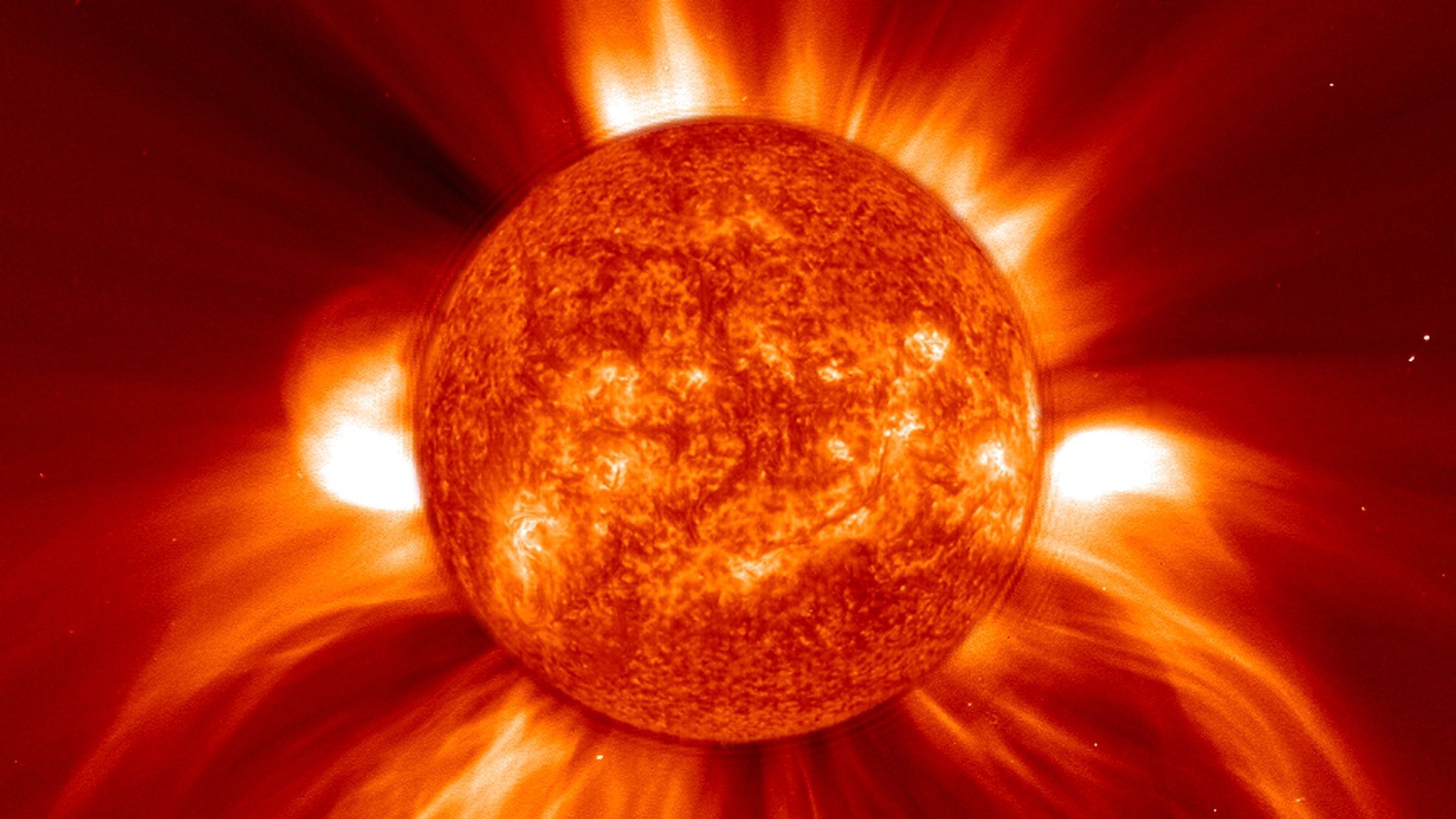
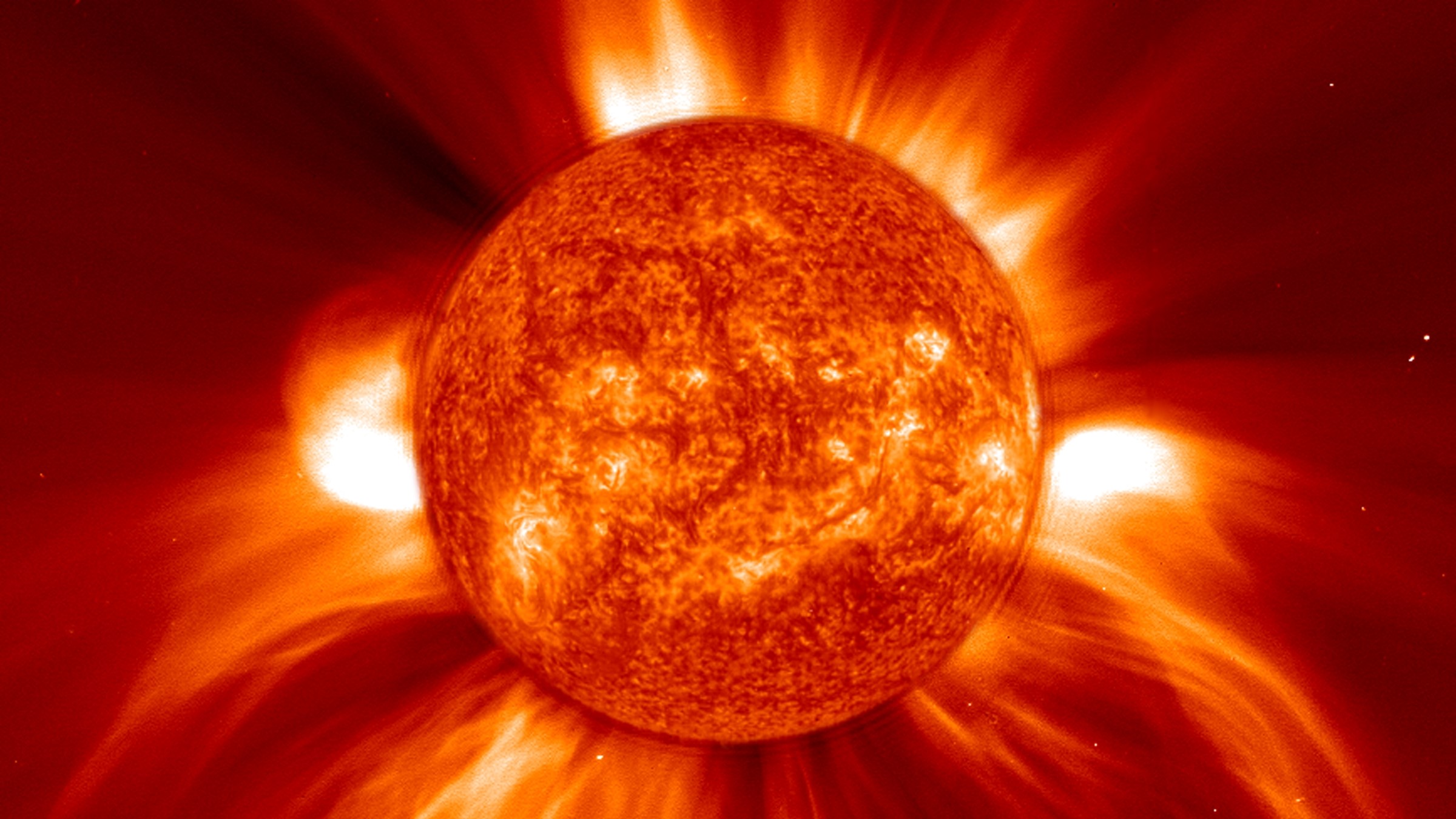
Solar eruptions, also known as coronal mass ejections (CMEs), are massive clouds of magnetized plasma that are released from the sun's outer atmosphere, known as the corona. These eruptions occur when a solar flare, a sudden and intense release of energy, expels a huge cloud of charged particles into space. CMEs can have a significant impact on the solar system, posing a radiation hazard to astronauts, spacecraft, and even passengers on jet liners. However, they can also trigger the beautiful lights of the aurora when they intercept Earth.
Tracking A Coronal Mass Ejection
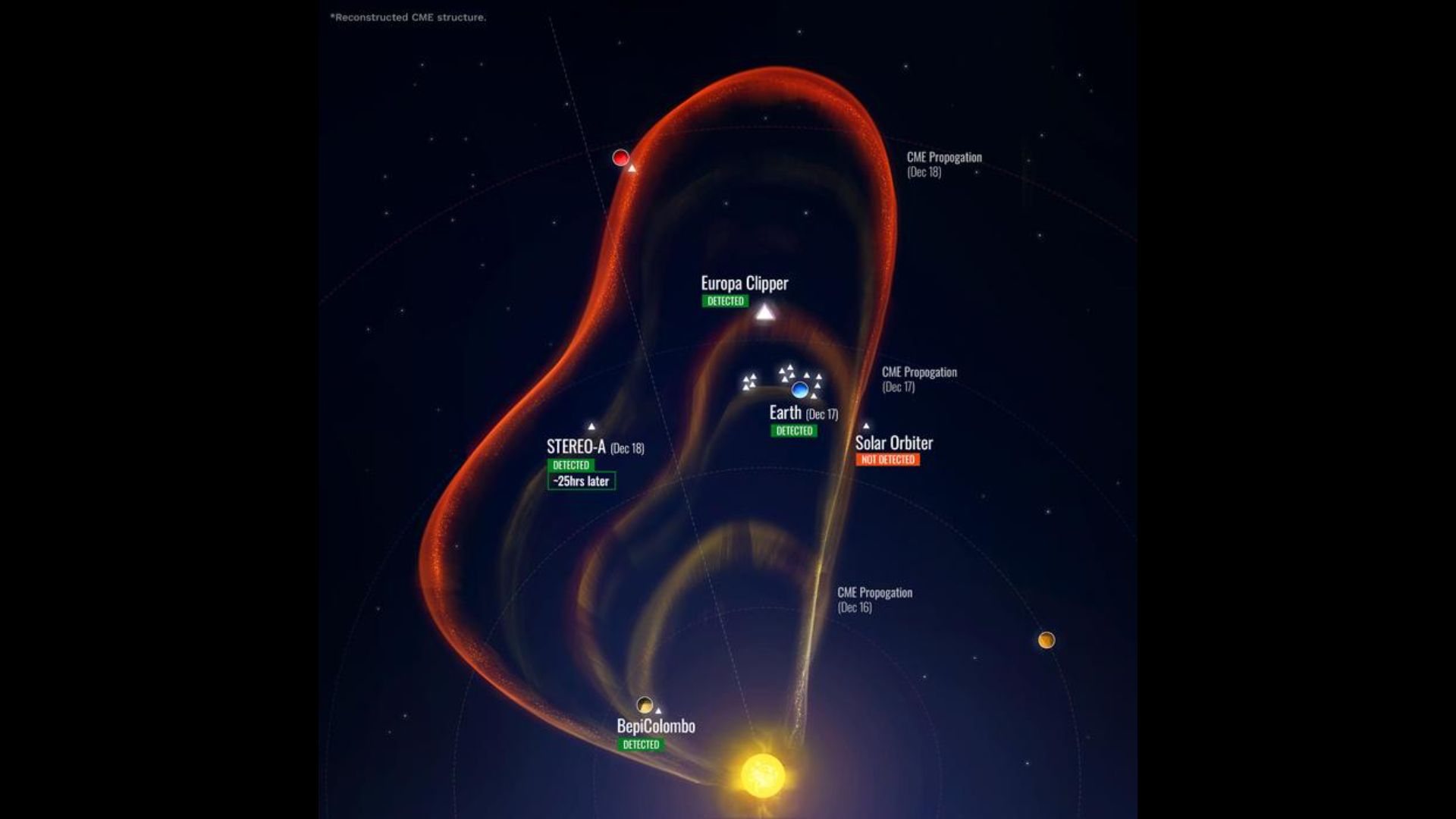
A recent study used a record 17 spacecraft to track and characterize a CME that erupted from the sun on December 15, 2024. The spacecraft were spread throughout the solar system, providing an exceptionally detailed view of how the CME evolved. The previous record for tracking a CME was 10 spacecraft, but they were mostly in a rough line from the sun to the Earth and beyond, limiting their measurements to a one-dimensional view. In contrast, the 17 spacecraft used in this study were spread far and wide, allowing researchers to gain a more comprehensive understanding of the CME's behavior.
Discovering The True Extent Of The CME
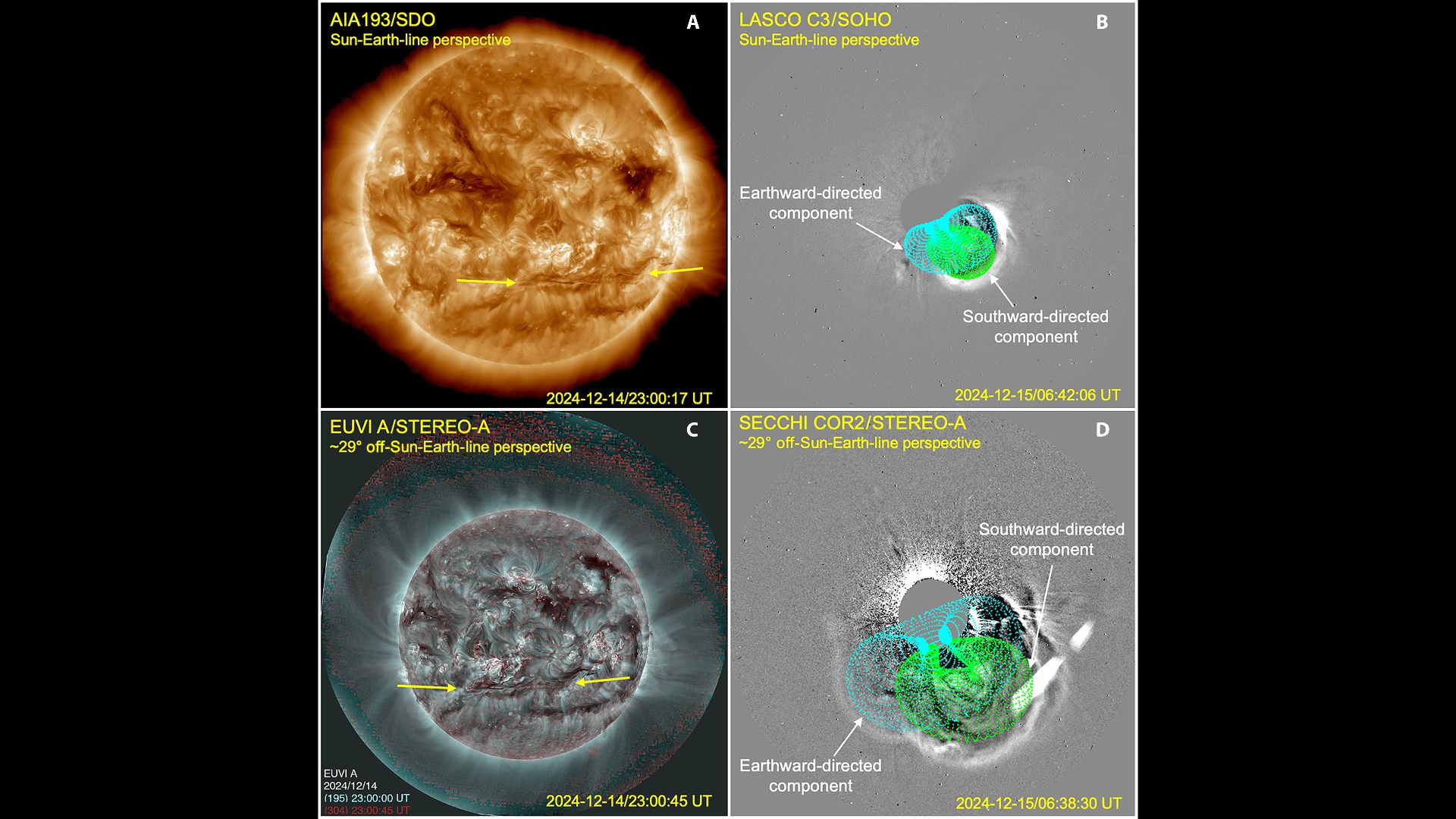
The observations from the 17 spacecraft revealed that the CME had two asymmetric lobes, one moving faster than the other. One of the lobes, which headed for Earth and Mars, would have gone unseen if not for the wide spread of the spacecraft. The faster lobe was obscured by the larger, slower lobe that left the sun at a tangent. The onset of the CME was seen by the joint NASA-ESA Solar and Heliospheric Observer (SOHO), but it only detected the slower lobe. The faster lobe was missed, highlighting the importance of having multiple spacecraft at different vantage points to track these complex events.
Implications Of The Study
The study's findings have significant implications for our understanding of solar eruptions and their impact on the solar system. By revealing the true extent of the CME, the researchers were able to gain a better understanding of how these events evolve and behave. This knowledge can be used to improve space weather forecasting, which is critical for protecting astronauts, spacecraft, and electronic systems from the harmful effects of solar radiation. The study also highlights the importance of continued investment in space research and the development of new spacecraft and technologies to study the sun and its behavior.
Future Outlook
The study demonstrates the power of collaborative research and the importance of using multiple spacecraft to study complex events like solar eruptions. As new spacecraft and technologies are developed, researchers will be able to gain an even deeper understanding of the sun and its behavior. This knowledge will be critical for protecting our planet and its inhabitants from the harmful effects of solar radiation, as well as for improving our understanding of the solar system and its many mysteries.
Sources
This is an original synthesis by Qivorane based on reporting from the outlets below.