
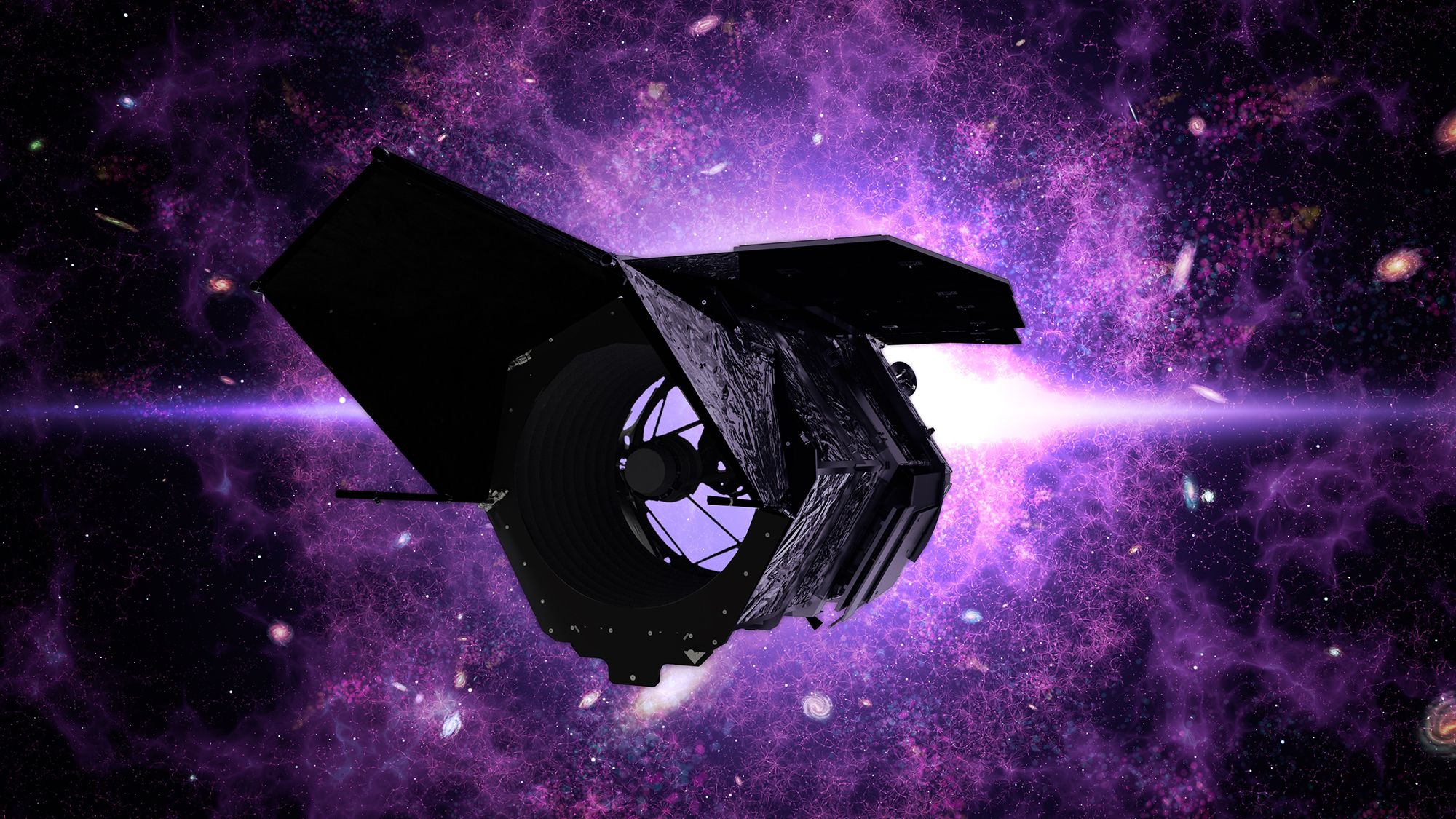
Roman Space Telescope Launch
NASA's Roman Space Telescope launched to study dark matter, dark energy, and exoplanets
Introduction To The Roman Space Telescope
The Nancy Grace Roman Space Telescope, launched on August 30, 2026, aboard a SpaceX Falcon Heavy rocket, marks a significant milestone in space exploration. This powerful observatory is expected to discover thousands of new exoplanets, shed light on mysterious dark energy and dark matter, and expand our understanding of the universe. As the Roman Space Telescope embarks on its journey to the sun-Earth Lagrange Point 2 (L2), astronomers and scientists are eagerly awaiting the commencement of its science work, slated to begin in early 2027.The Journey To Lagrange Point 2
The Roman Space Telescope's destination, L2, is a region about 930,000 miles from Earth in the Marsward direction, where gravitational forces balance to keep objects in steady orbits with minimal assistance. This location is ideal for the telescope, as it will help block out unwanted light from the sun, Earth, and moon, and maintain the instruments at a cool temperature. The thermal stability of an observatory at L2 will provide a ten-fold improvement beyond Hubble in much of the data Roman will gather. The journey to L2 will take approximately 30 days, after which the Roman team will begin the commissioning process, ensuring that all systems and subsystems are working properly.Commissioning And Science Instruments
The commissioning process will involve checking the Wide Field Instrument (WFI) and the Coronagraph Instrument (CGI), which are the science gear of the Roman Space Telescope. The WFI is a 300-megapixel infrared camera that will allow scientists to look far back in time, unraveling the universe's expansion history and hinting at its future evolution. The CGI, on the other hand, is a technology demonstration that will block the light of distant stars, enabling the detection of previously unknown alien worlds. The CGI will be far more powerful than any other coronagraph ever flown, seeing planets that are almost a billion times fainter than their host star.Expected Discoveries And Implications
The Roman Space Telescope's expected discoveries and implications are vast and profound. By studying dark matter, dark energy, and exoplanets, astronomers hope to gain a deeper understanding of the universe's cosmic history and the potential for life beyond our solar system. The telescope's sweeping observations will also support many discoveries beyond its central objectives, making it a discovery machine that will bring us closer to answering humanity's most profound questions about our cosmic history. As NASA Administrator Jared Isaacman noted, "Roman will give us a new atlas of the universe, push the boundaries of discovery, and demonstrate what is possible when America's space program pairs bold ambition with disciplined execution."Future Outlook And Legacy
The Roman Space Telescope's science life is slated to last five years, but astronomers are hopeful that it will far outlast its warranty, just like NASA's Hubble Space Telescope, which is still going strong today, more than 36 years after its launch. The Chandra X-ray Observatory is another example of a NASA space telescope that has overcome budget issues and is still operational in Earth orbit today, more than 25 years after its launch. As the Roman Space Telescope begins its journey, it is poised to make significant contributions to our understanding of the universe, and its legacy will likely be felt for decades to come.Conclusion And Next Steps
In conclusion, the Nancy Grace Roman Space Telescope is an exciting and powerful new tool for space exploration, with a long journey ahead of it. As it travels to L2 and begins its commissioning process, astronomers and scientists are eagerly awaiting the commencement of its science work. With its expected discoveries and implications, the Roman Space Telescope is poised to make significant contributions to our understanding of the universe, and its legacy will likely be felt for decades to come. The next steps for the Roman team will involve ensuring the telescope's systems and subsystems are working properly, and then beginning its science work, which will include studying dark matter, dark energy, and exoplanets.Sources
This is an original synthesis by Qivorane based on reporting from the outlets below.