
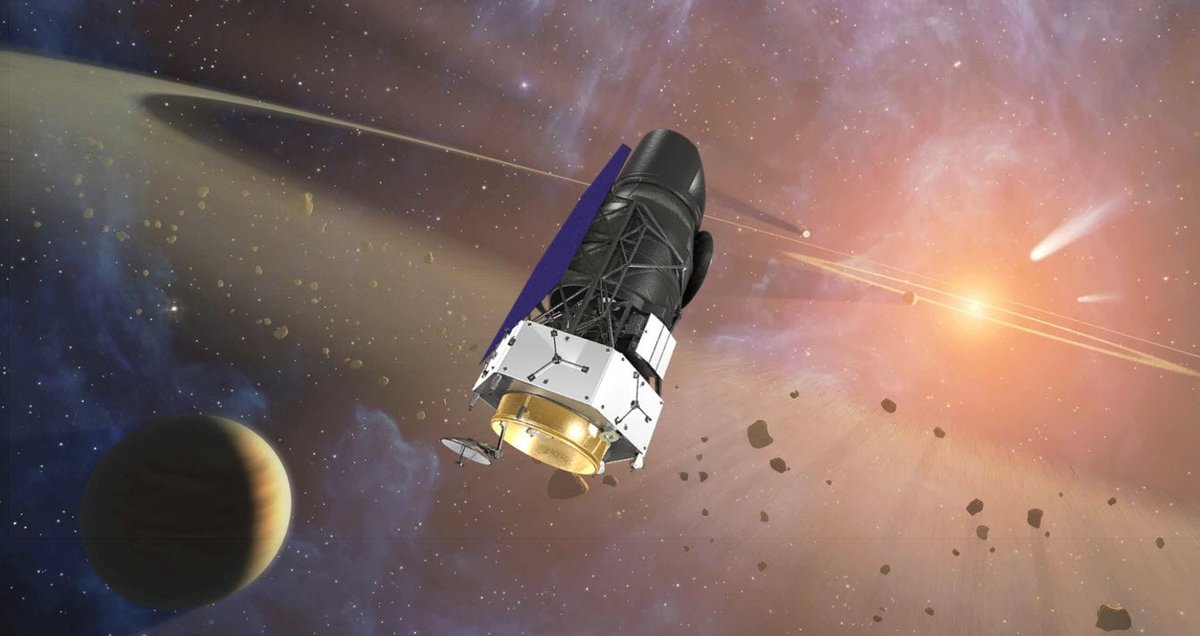
NASA's Roman Telescope
NASA's Roman Space Telescope to survey vast areas of sky, detecting infrared light and studying exoplanets.
Introduction To The Roman Space Telescope
The Nancy Grace Roman Space Telescope, set to launch in the near future, marks a significant milestone in NASA's astrophysics missions, following the footsteps of the James Webb Space Telescope. This new observatory is designed to survey vast areas of the sky quickly, unlike its predecessor, which focuses on studying small regions in extraordinary depth. With its ability to detect infrared light, Roman will provide astronomers with a unique opportunity to compare and combine its observations with those of other telescopes, revealing more about the universe than either could on its own.
Design And Capabilities
Roman boasts a 7.9-foot primary mirror, the same diameter as the Hubble Space Telescope's, along with two major scientific instruments: the Coronagraph Instrument and the Wide Field Instrument. The Coronagraph Instrument is designed to block and filter the light from stars, allowing astronomers to study exoplanets and disks around them. The Wide Field Instrument, on the other hand, is designed to match the sensitivity of Hubble's cameras while imaging an area 100 times larger. This wide view will enable Roman to find rare objects both close to Earth and across enormous cosmic distances, including dying stars, newly discovered worlds, galaxy clusters, and many other targets.
Exoplanet Detection
One of Roman's main goals is to directly observe exoplanets orbiting bright, nearby stars. To achieve this, the telescope is equipped with the Coronagraphic Instrument (CGI), which uses an opaque mask to cover the target star, blocking its glare and allowing the light from the exoplanet to pass through to the detector. The CGI incorporates multiple masks of varying shapes, which can be switched out on the fly for different imaging modes, and automatically corrects for the troublesome fact that light passing through a telescope's optics isn't perfectly steady.
Scientific Goals And Implications
Roman's main scientific goals include investigating dark matter and dark energy, two mysterious components that account for nearly all of the universe. Dark matter exerts gravity but does not give off light, while dark energy is associated with the accelerating expansion of the universe. By combining Roman images with spectroscopic measurements, researchers hope to study dark matter and dark energy with greater precision than has previously been possible. The telescope will also identify galaxies across a wide range of distances, determine their locations, and measure their characteristics, allowing astronomers to build large catalogs and apply physical models to determine what those catalogs reveal about the structure and evolution of the universe.
Research And Collaboration
The University of Arizona's Arizona Cosmology Lab will play a leading role in supporting Roman's science efforts, with researchers contributing to several major areas of Roman science. Elisabeth Krause, a professor of astronomy and physics, leads the wide-field science team "Kinematic Lensing with the Roman Space Telescope," which received $2 million to develop a cosmological measurement technique known as kinematic lensing. Another U of A group will lead the multi-institutional project infrastructure team "Maximizing Cosmological Science with the Roman High Latitude Imaging Survey," which will interpret Roman's cosmological observations and require substantial computing power.
Sources
This is an original synthesis by Qivorane based on reporting from the outlets below.