
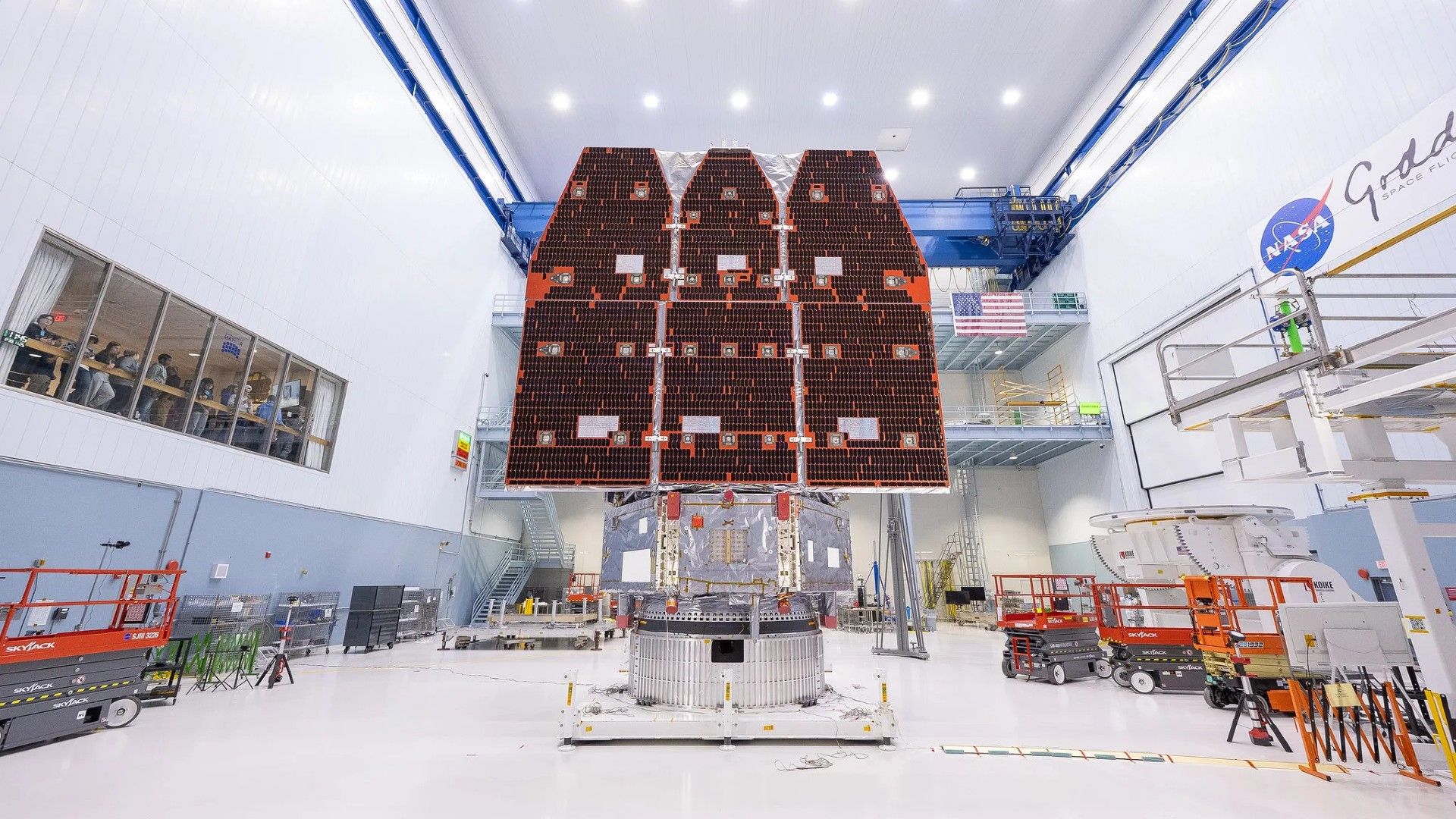
NASA's Roman Space Telescope Launch
NASA readies Roman Space Telescope for launch on Falcon Heavy rocket
Introduction To The Nancy Grace Roman Space Telescope
The Nancy Grace Roman Space Telescope is NASA's next great observatory, poised to lead humanity's next generation of astronomical discoveries. The Roman Space Telescope will research the mysteries of dark energy, search for exoplanets, and investigate the physics of distant stars. With its launch scheduled for no earlier than 7:26 a.m. EDT on Sunday, Aug. 30, the telescope is set to ride into space aboard a SpaceX Falcon Heavy rocket from Launch Complex 39A at Kennedy Space Center.
Pre-Launch Preparations
Technicians have spent the last several weeks undergoing the telescope's final launch preparations at Kennedy Space Center. The observatory was loaded with 290 gallons of hydrazine fuel on July 25, then attached to its payload adapter in early August. Recently, Roman was encapsulated inside Falcon Heavy's payload fairing and underwent a full launch-day dress rehearsal on Aug. 20. Following the successful rehearsal, NASA, SpaceX, and Roman mission managers completed the mission's Flight Readiness Review on Aug. 21, formally clearing the observatory to begin its final launch preparations. 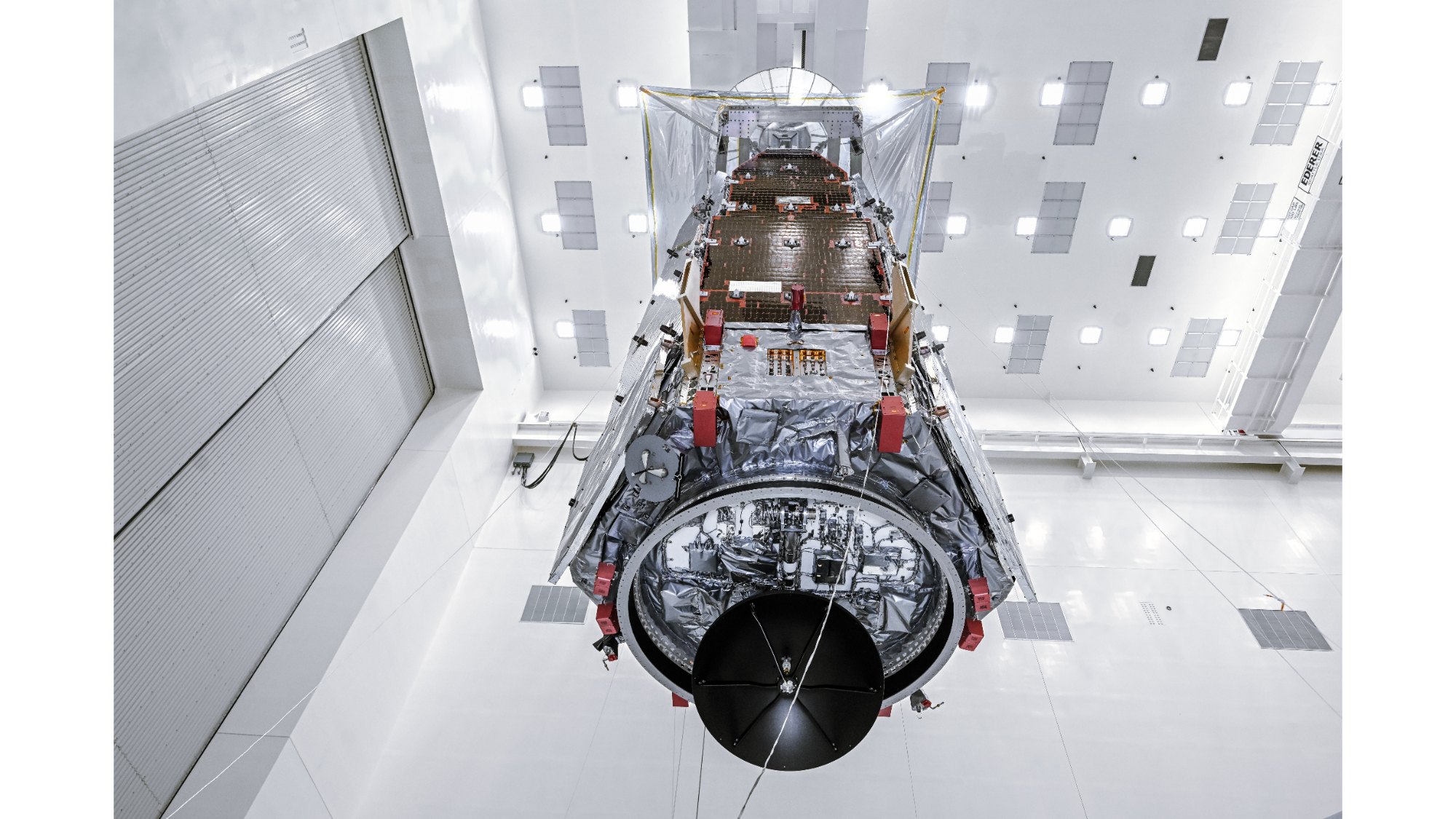
The Science Behind The Roman Space Telescope
The Roman Space Telescope is designed to give astronomers a much broader view of the cosmos. Its observations are expected to help researchers investigate some of the biggest unanswered questions in astronomy, including the evolution of the universe, the cause of its expansion, and the investigation of exoplanets. By surveying large regions of the sky, Roman is expected to provide researchers with a powerful new way to study the history and structure of the universe while also expanding our understanding of distant planetary systems.
Launch And Deployment
Next, the telescope, encapsulated in its payload fairings, will be transported to SpaceX's hangar at LC-39A, where it will be attached to the Falcon Heavy rocket before rolling out to the pad for launch. The Falcon Heavy rocket, one of SpaceX's most powerful launch vehicles, uses three connected rocket boosters to provide the thrust needed to carry large spacecraft into space. 
Future Implications And Outlook
The launch of the Nancy Grace Roman Space Telescope marks an exciting new chapter in astronomical research. With its advanced technology and capabilities, the telescope is set to make significant contributions to our understanding of the universe. As researchers begin to analyze the data collected by the Roman Space Telescope, we can expect to gain new insights into the mysteries of dark energy, exoplanets, and the physics of distant stars. The future of astronomical research looks bright, and the Nancy Grace Roman Space Telescope is poised to play a leading role in shaping our understanding of the cosmos.
Sources
This is an original synthesis by Qivorane based on reporting from the outlets below.