
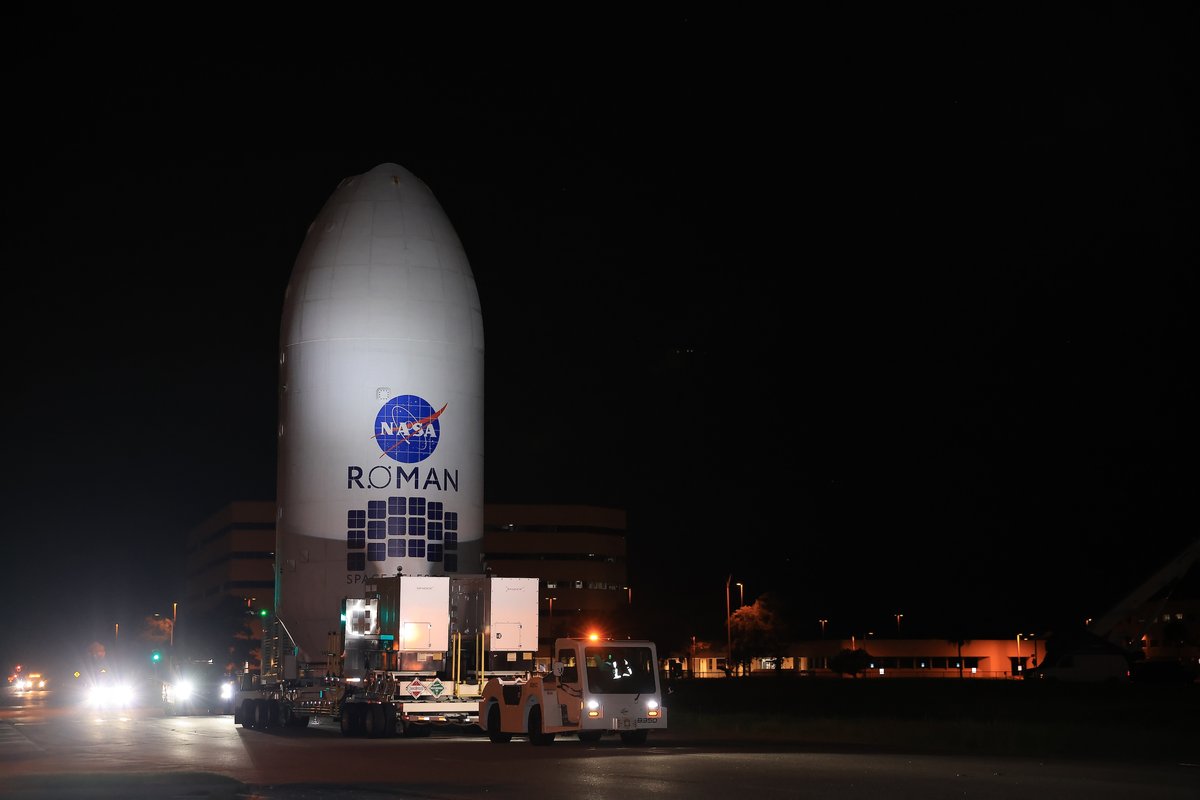
Roman Space Telescope Launch
NASA's Roman Space Telescope to study dark energy, dark matter, and exoplanets
Introduction To Roman Space Telescope
The Nancy Grace Roman Space Telescope, set to launch on August 30, promises to revolutionize our understanding of the cosmos. With its unprecedented field of view, 100 times that of the Hubble Space Telescope, Roman is expected to make significant contributions to various fields of astronomy. From resolving the Hubble tension to shedding light on dark energy and dark matter, the telescope's discoveries will have far-reaching implications for our understanding of the universe.Resolving The Hubble Tension
One of the most significant challenges in modern astrophysics is the Hubble tension, which refers to the discrepancy between the measured values of the Hubble constant. The Hubble constant describes the rate at which the universe is expanding, and its value has been measured using different methods, yielding conflicting results. The Roman Space Telescope will greatly increase the number of galaxies with precisely clocked speeds, which may help clarify the origins of this tension. By providing a more accurate measurement of the Hubble constant, Roman will help astronomers better understand the history and evolution of the universe.Exploring Dark Energy And Dark Matter
The Roman Space Telescope will also play a crucial role in the study of dark energy and dark matter. Dark energy is a mysterious component that drives the acceleration of the universe's expansion, while dark matter is an invisible form of matter that holds galaxies and galaxy clusters together. Recent data suggest that dark energy may be fading away, and Roman's expansive catalog will help confirm or refute these tentative results. Additionally, the telescope will provide insights into the distribution of dark matter, which will help astronomers better understand the formation and evolution of cosmic structures.Launch And Mission Overview
The Roman Space Telescope is scheduled to launch atop a SpaceX Falcon Heavy rocket from NASA's Kennedy Space Center in Florida. The launch will be followed by a 30-day journey to the sun-Earth Lagrange Point 2, where the telescope will begin its five-year science mission. The mission team will spend several months checking out the observatory's systems and science gear before it becomes operational. The telescope's science goals are ambitious, including the discovery of thousands of exoplanets and the revelation of new information about dark matter and dark energy.Science Objectives And Expectations
The Roman Space Telescope has several science objectives, including the study of dark energy, dark matter, and the formation of galaxies. The telescope's coronagraph instrument will allow it to directly image exoplanets and study their atmospheres. The Roman Science Operations Center and the Roman Science Support Center will play critical roles in the mission's success, providing support for the telescope's operations and data analysis. With its advanced technology and ambitious science goals, the Roman Space Telescope is expected to make significant contributions to our understanding of the universe, and its discoveries will have far-reaching implications for the field of astronomy.Future Outlook And Implications
The launch of the Roman Space Telescope marks the beginning of a new era in astronomy. The telescope's discoveries will have significant implications for our understanding of the universe, from the formation of galaxies to the properties of dark energy and dark matter. As the telescope begins its five-year science mission, astronomers and scientists around the world will be eagerly awaiting its findings, which will help shape our understanding of the cosmos and inspire new generations of astronomers and scientists. With its unprecedented field of view and advanced technology, the Roman Space Telescope is poised to revolutionize our understanding of the universe, and its impact will be felt for years to come.Sources
This is an original synthesis by Qivorane based on reporting from the outlets below.