
Pluto Dwarf Planet Status
Pluto's reclassification as a dwarf planet sparked debate and new research into solar system diversity.
Introduction To The Pluto Debate
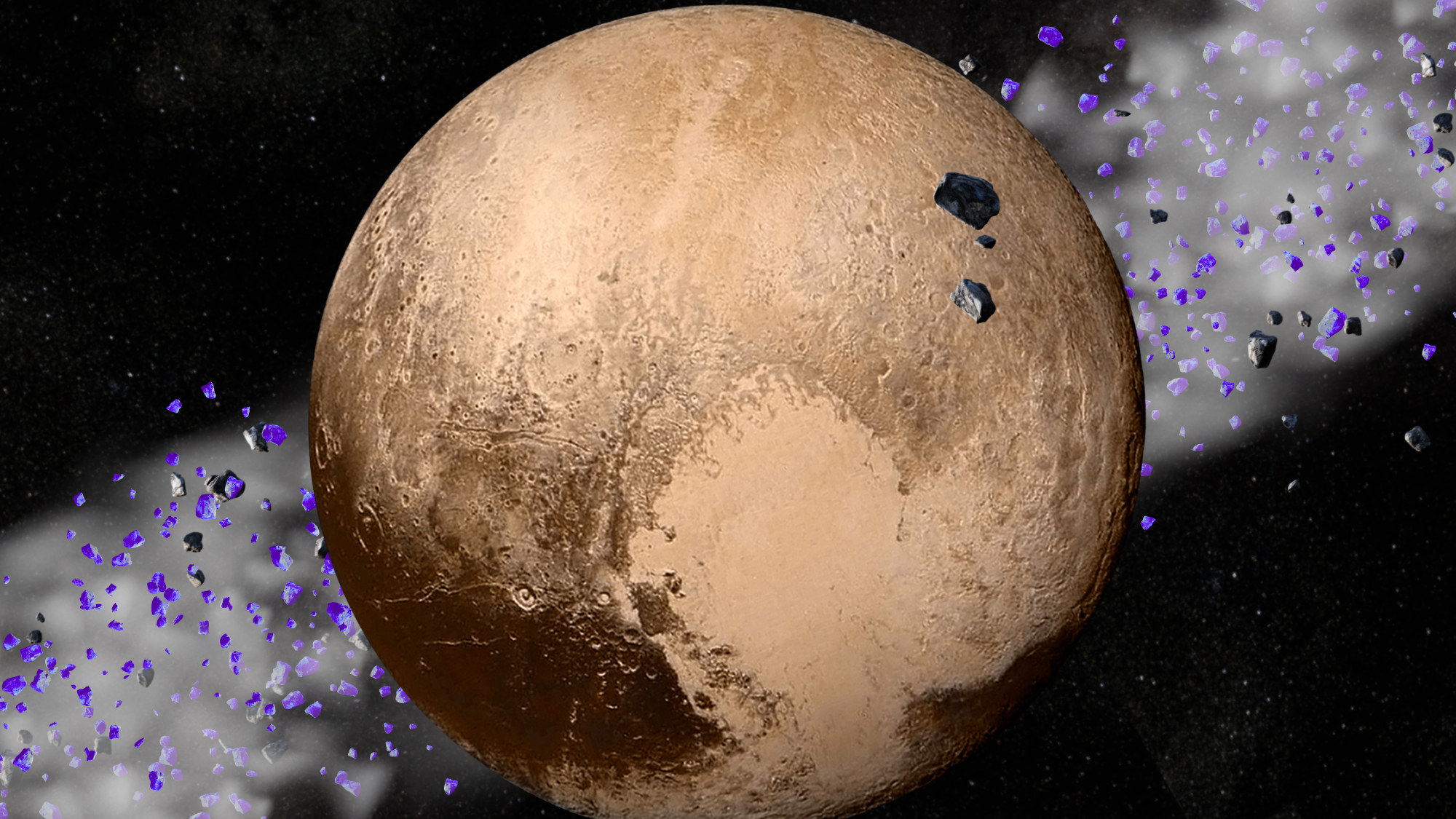
The reclassification of Pluto as a dwarf planet in 2006 was a pivotal moment in the history of astronomy, sparking a debate that continues to this day. According to the International Astronomical Union (IAU), a planet is defined as a celestial body that orbits the sun, has sufficient mass to assume hydrostatic equilibrium, and has cleared the neighborhood around its orbit. Pluto fails to meet the third criterion, as its orbit overlaps with other objects in the Kuiper Belt, a region of icy bodies and debris beyond Neptune. This decision has been met with both acceptance and resistance, with some arguing that Pluto's unique characteristics and geological activity warrant its classification as a planet.The Road To Reclassification
The journey to reclassify Pluto began with the discovery of other objects in the Kuiper Belt that were similar in size and composition to Pluto. One such object, known as Eris, was discovered in 2005 and was found to be comparable in size to Pluto. This raised questions about the criteria for what constitutes a planet and whether Pluto should be considered a planet if other similar objects existed. The IAU formed a committee to study the issue and propose a new definition of a planet. Initially, the committee proposed a definition that would have classified Pluto, Ceres, Charon, and Eris as planets, with Pluto and similar worlds belonging to a new planetary subclass called "plutons." However, this definition was ultimately rejected in favor of the current definition, which emphasizes a planet's ability to clear its orbit.Implications Of The Reclassification
The reclassification of Pluto has had significant implications for our understanding of the solar system and its diversity. By recognizing Pluto as a dwarf planet, scientists have been able to study and appreciate the unique characteristics of this class of objects. Dwarf planets are large enough to be rounded by their own gravity but have not cleared their orbits of other objects. This definition has allowed scientists to identify other dwarf planets in the solar system, such as Eris and Ceres, and to study their compositions and geological activity. The New Horizons spacecraft, which flew by Pluto in 2015, revealed a complex and dynamic world with water-ice mountains, a vast nitrogen glacier, and layers of atmospheric haze. These findings have challenged the traditional view of Pluto as a small, icy body and have sparked new interest in the study of dwarf planets.Ongoing Debate And Future Research
Despite the IAU's definition, the debate over Pluto's status continues. Some scientists argue that the definition is too narrow and that Pluto's geological activity and internal makeup should be considered in its classification. Others propose that the definition should be expanded to include other characteristics, such as a planet's ability to support life. The study of dwarf planets and their place in the solar system is an active area of research, with scientists using a variety of methods to study these objects. The discovery of exoplanets, which are planets that orbit stars outside of our solar system, has also raised questions about the definition of a planet and whether it should be applied universally. As scientists continue to explore and study the solar system, the debate over Pluto's status is likely to remain a topic of discussion and research.Conclusion And Future Outlook
In conclusion, the reclassification of Pluto as a dwarf planet has been a significant event in the history of astronomy, with implications for our understanding of the solar system and its diversity. While the debate over Pluto's status continues, the recognition of dwarf planets as a distinct class of objects has opened up new areas of research and study. As scientists continue to explore and study the solar system, it is likely that our understanding of Pluto and other dwarf planets will continue to evolve. The study of these objects has the potential to reveal new insights into the formation and evolution of the solar system and the possibility of life beyond Earth.Sources
This is an original synthesis by Qivorane based on reporting from the outlets below.