
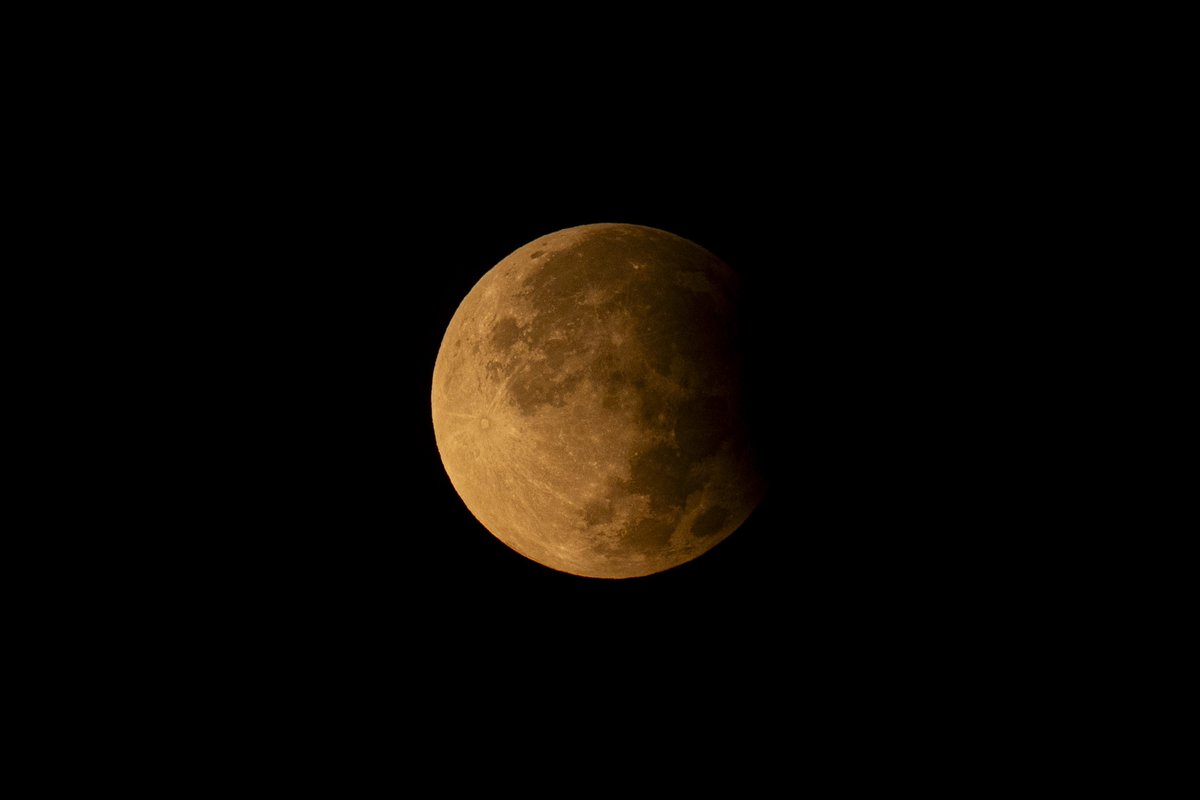
Blood Moon Eclipse 2026
Witness the 2026 blood moon eclipse, visible from Americas, Africa, and Europe
Introduction To The Blood Moon Eclipse
The 2026 'blood moon' eclipse is set to occur this week, and it will be visible from the Americas, Africa, and Europe. This near-total lunar eclipse will cover 96.3 percent of the moon, and it is expected to turn a reddish hue. The eclipse will begin at around 9:23 P.M. EDT on Thursday, with the moment of greatest eclipse occurring at around 12:13 A.M. EDT on August 28.Understanding Lunar Eclipses
A lunar eclipse occurs when Earth passes directly between the sun and the moon. Because of how light bends and filters around our planet, blue light is scattered away, while red light reaches the moon, hence the "blood moon" monicker. The display will kick off at around 9:23 P.M. EDT on Thursday, but the show will truly begin at around 10:34 P.M. EDT that night, when the moon will start to slip into Earth's dark umbral shadow.
Viewing The Eclipse
To see the eclipse, go outside to a safe, dark space at around 10:34 P.M. EDT on Thursday, when the moon will begin to cut into Earth's umbra. Your eyes will need around 30 minutes to become accustomed to the dark. Unlike a solar eclipse, you don't need any special equipment to view a lunar eclipse. Simply head outside and look up. If you own binoculars or a telescope, take a look through them for an even better view of Earth's shadow sweeping across the lunar surface.Eclipse Timings And Visibility
The eclipse begins when the moon enters Earth's faint outer shadow at 9:23 p.m. EDT on Aug. 27. Things get much more interesting at 10:33 p.m. EDT, when the partial eclipse begins and Earth's dark umbral shadow starts to creep across the lunar surface. Maximum eclipse occurs at 12:12 a.m. EDT on Aug. 28, when 96.2% of the moon will be immersed in Earth's umbra. The partial phase ends at 1:51 a.m. EDT, with the penumbral eclipse concluding at 3:01 a.m. EDT.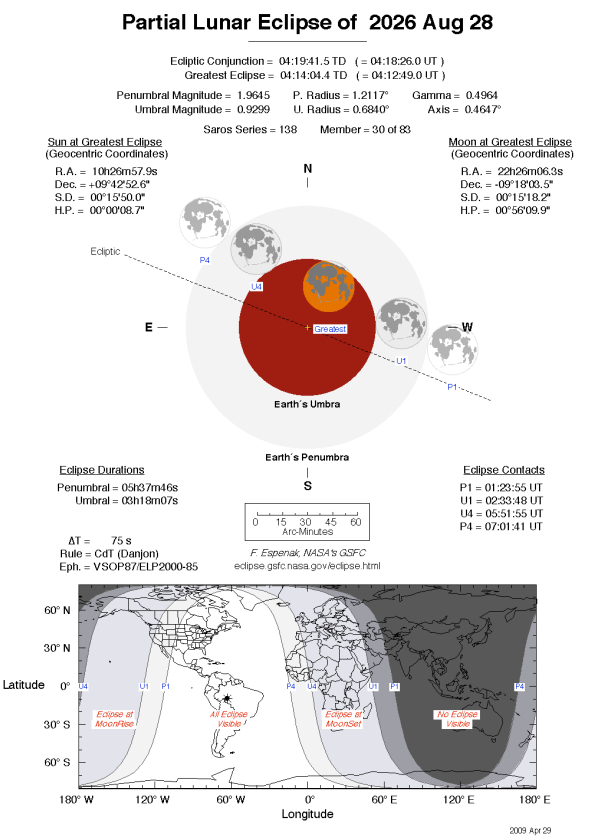
Future Celestial Events
This week's lunar eclipse follows a total lunar eclipse in March and will be the second and last lunar eclipse of the year. But if you miss it, more celestial events are coming in 2027. Two solar eclipses will take place next year—one on February 6 and the other on August 2. However, three lunar eclipses in 2027 will be "penumbral"—meaning the moon will pass through Earth's penumbra, the fainter part of its shadow, which won't make quite as spectacular a view. The next total lunar eclipse will take place on New Year's Eve in 2028.Conclusion And Outlook
The 2026 'blood moon' eclipse is a rare and spectacular event that should not be missed. With its near-total coverage of the moon and reddish hue, it will be a sight to behold. Whether you're a seasoned astronomer or just a casual observer, this event is sure to leave you in awe. So mark your calendars, grab your binoculars, and get ready to witness this incredible celestial spectacle.Sources
This is an original synthesis by Qivorane based on reporting from the outlets below.
- [1] Scientific American: How to see the 2026 ‘blood moon’ eclipse this week
- [2] Space.com: What time is the partial lunar eclipse on Aug. 27-28? Here's when to see the 96% 'blood moon'