
Aluminum Eggshells Protect Spacecraft
Aluminum eggshells filled with water can protect spacecraft from space debris
Introduction To Space Debris Protection
As space exploration continues to advance, the issue of space debris in low Earth orbit (LEO) has become a growing concern. With nearly one million pieces of debris larger than one centimeter orbiting the Earth, the risk of high-speed impacts on spacecraft is increasing. Researchers from Dalian University of Technology in China have been inspired by the humble egg to develop a potential solution to this problem. By creating aluminum "eggshells" filled with water, they have designed a metastructure that can absorb and distribute energy from impacts, potentially protecting spacecraft from damage.
The Science Behind Eggshell Inspiration
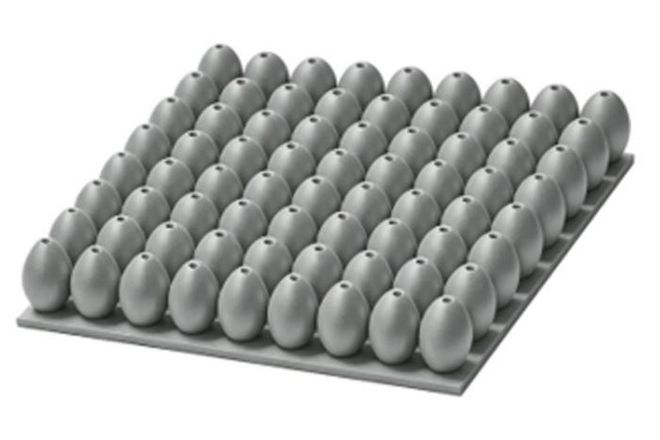
The idea behind this design is that while a single eggshell may be fragile, a collective array of eggshells can provide excellent energy absorption performance. The researchers created an array of aluminum eggshells filled with water and situated them between two aluminum impact plates. When an impact occurs, the energy is dispersed through multiple "eggs" instead of a single shell, slowing it down and reducing the force of the impact. The water inside the eggshells also plays a crucial role in suppressing impact waves, moving around and absorbing energy as it passes through. This combination of factors significantly reduces the effects of debris impacts, with the water-filled eggs outperforming other tests by reducing the impact projectile by almost 65 percent.
Testing And Optimization
The research team conducted several simulations to test their design, including water-filled aluminum spheres placed between aluminum plates, empty aluminum plates, and the water-filled aluminum eggs between the two aluminum plates. The results showed that the water-filled eggs performed the best, withstanding high impacts and reducing the impact projectile by almost 65 percent. The team also tested different water-filled aluminum egg orientations and found that the best overall metastructure pattern was aluminum eggs placed upright, with their small end touching the top of the plate. While this protection method is still in its early stages, the researchers are optimistic about its potential and are currently working to optimize the method's geometry, thickness, and filling needs.
Real-World Implications And Future Outlook
The development of this eggshell-inspired metastructure has significant implications for the protection of spacecraft from space debris. As the number of spacecraft launches continues to grow, the risk of collisions with debris also increases. This design could provide a lightweight and effective solution to this problem, potentially saving spacecraft from damage and ensuring the safety of astronauts and equipment. While there is still work to be done to optimize the design, the researchers are hopeful that their work will attract more attention to bio-inspired protective structures and lead to the development of new technologies for space exploration.
Conclusion And Future Directions
In conclusion, the use of aluminum eggshells filled with water as a metastructure for protecting spacecraft from space debris is a promising area of research. The unique combination of energy absorption and distribution, along with the suppression of impact waves, makes this design an effective solution to the growing problem of space debris. As researchers continue to optimize and refine this design, it is likely that we will see the development of new technologies and materials inspired by nature. The potential applications of this research are vast, and it will be exciting to see how it contributes to the advancement of space exploration and the protection of spacecraft in the years to come.
Sources
This is an original synthesis by Qivorane based on reporting from the outlets below.