
Saturn's Mysterious Decagon
Hubble discovers 10-sided wave around Saturn's south pole, sparking new research
Introduction To Saturn's Mysterious Decagon
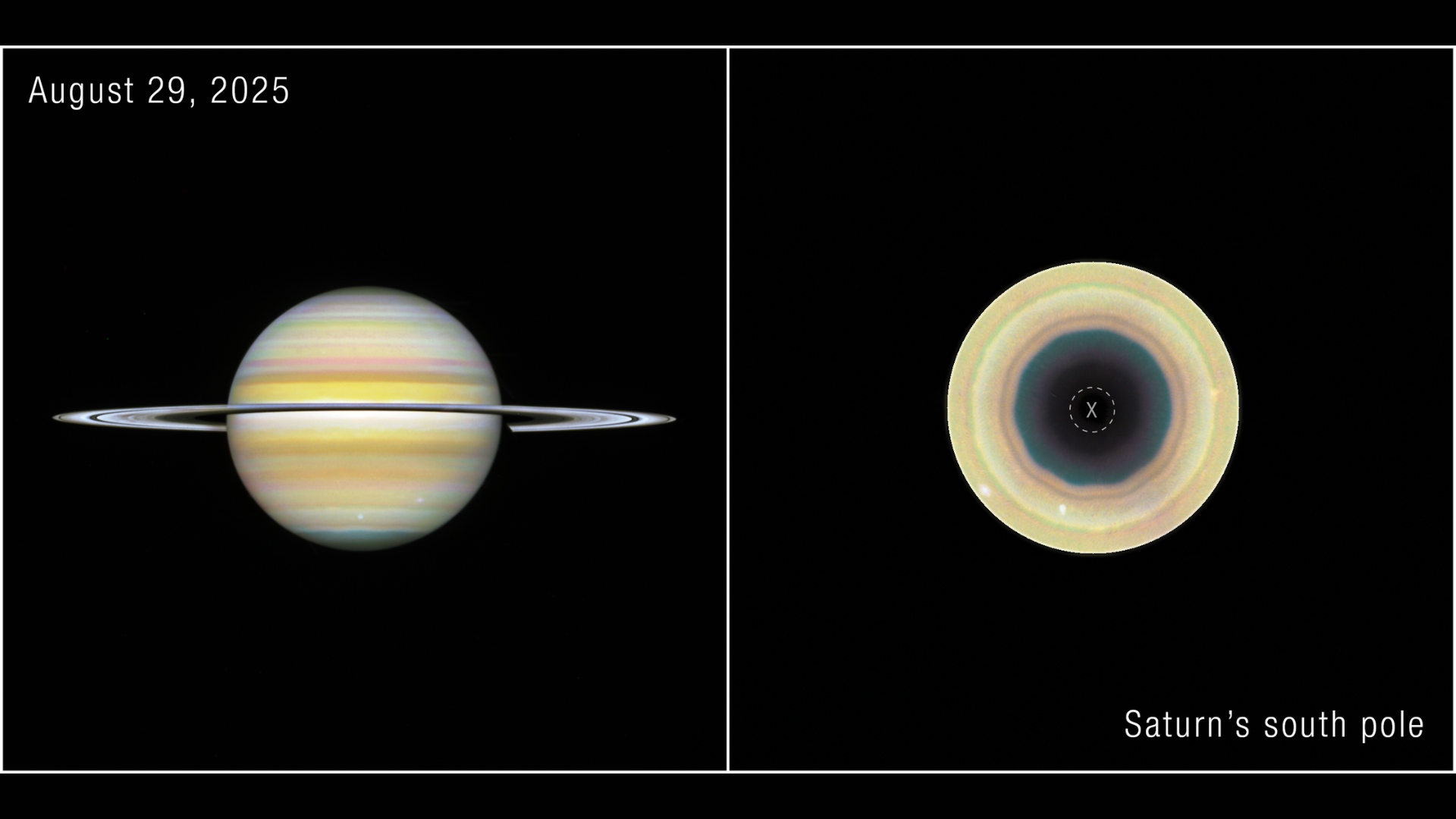
Recent observations from the Hubble Space Telescope have revealed a striking, 10-sided jet surrounding Saturn's south pole, leaving scientists curious about its sudden formation. This "decagon" appears to be evolving before our eyes, and its discovery has sparked a new wave of research into the planet's atmospheric patterns. The Hubble images show the decagon forming in 2023, with archival images indicating that it has been growing in strength since then.
Background And Discovery
The discovery of the decagon was first made by ground-based observatories in 2024, which spotted a mysterious undulating band around Saturn's south pole. Amateur astronomers Trevor Barry and Jean-Paul Oger, along with researcher Agustín Sánchez-Lavega, used the University of the Basque Country's Planetary Virtual Observatory Laboratory to make the initial discovery. Further observations in 2025 showed the wave starting to move into a decagon structure, prompting researchers to turn to Hubble for a more detailed view. 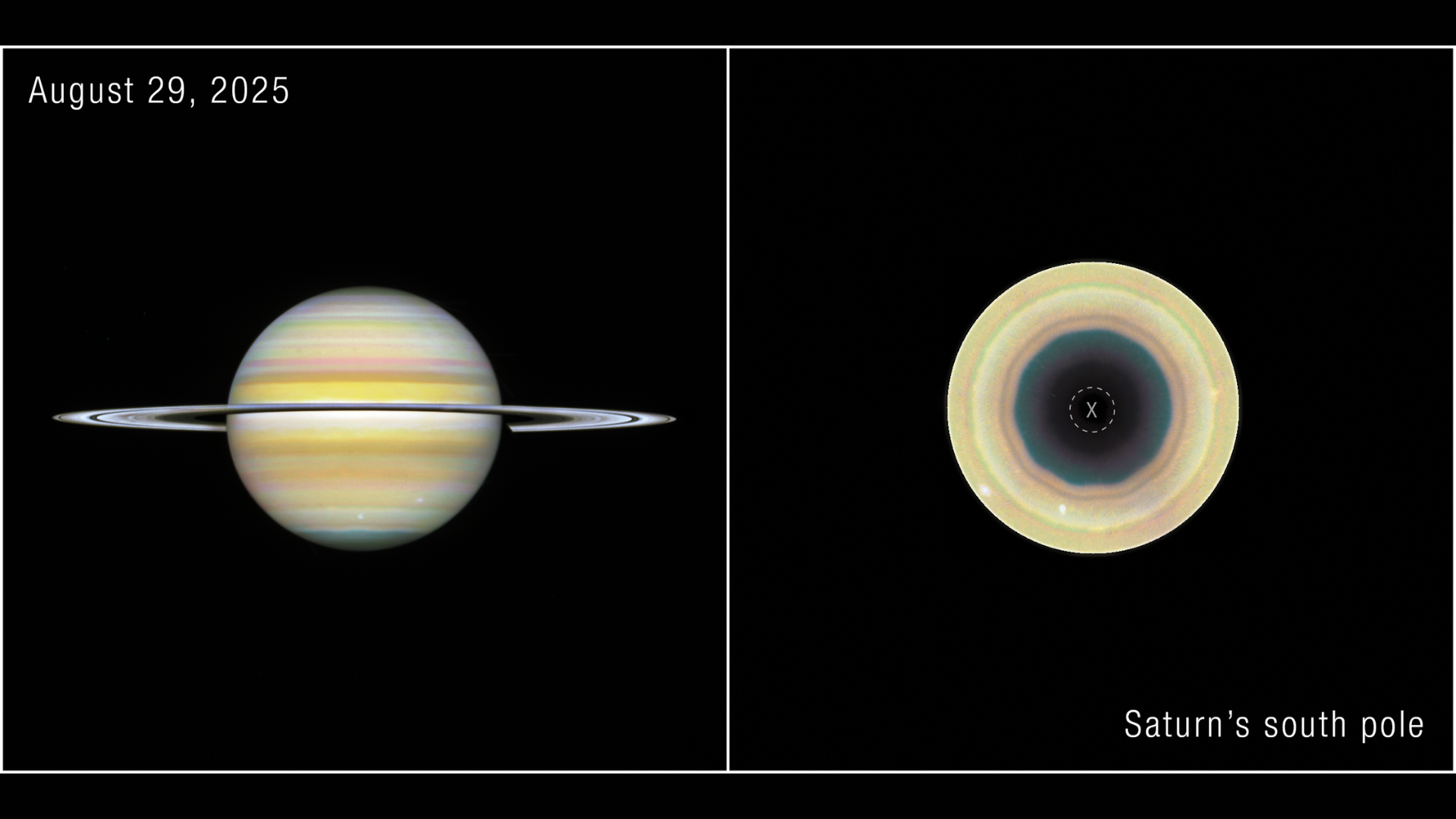
Comparison To Saturn's Northern Hexagon
The decagon has some similarities to Saturn's famous hexagon at its northern pole, but important differences suggest that researchers may be watching a distinct atmospheric phenomenon take shape. The northern hexagon has been observed for over 40 years, while the decagon appears to be strengthening and evolving rapidly. According to Amy Simon, a senior scientist at NASA's Goddard Space Flight Center, "The northern hexagon has been there every time we've looked for more than 40 years. This feature is different — it appears to be strengthening, giving us the rare opportunity to watch a giant atmospheric pattern develop." The Cassini spacecraft, which orbited Saturn between 2004 and 2017, did not see the decagon, hinting that it had not started forming yet.
Scientific Implications And Future Research
The discovery of the decagon has significant implications for our understanding of Saturn's atmospheric patterns and the planet's overall climate. The wave lies within one of Saturn's powerful jet streams and extends through several layers of the atmosphere, meaning it is not simply a pattern visible at the cloud tops. Researchers are eager to learn more about the decagon's formation and evolution, and additional observations from Hubble and NASA's James Webb Space Telescope, along with computer modeling, will be needed to determine how the structure formed and how long it might survive. As Simon noted, "The most intriguing part to me is that this seems to have just formed recently. The question is, why did it suddenly form now when we haven't seen one before?"
Conclusion And Future Outlook
The discovery of Saturn's decagon is a significant finding that has sparked a new wave of research into the planet's atmospheric patterns. As researchers continue to study the decagon and its evolution, they may uncover new insights into the planet's climate and the mechanisms that drive its atmospheric phenomena. With further observations and analysis, scientists may be able to answer the question of why the decagon formed suddenly and how it will change over time. The study of Saturn's decagon is an exciting area of research that will continue to captivate scientists and astronomers in the years to come.
Sources
This is an original synthesis by Qivorane based on reporting from the outlets below.