
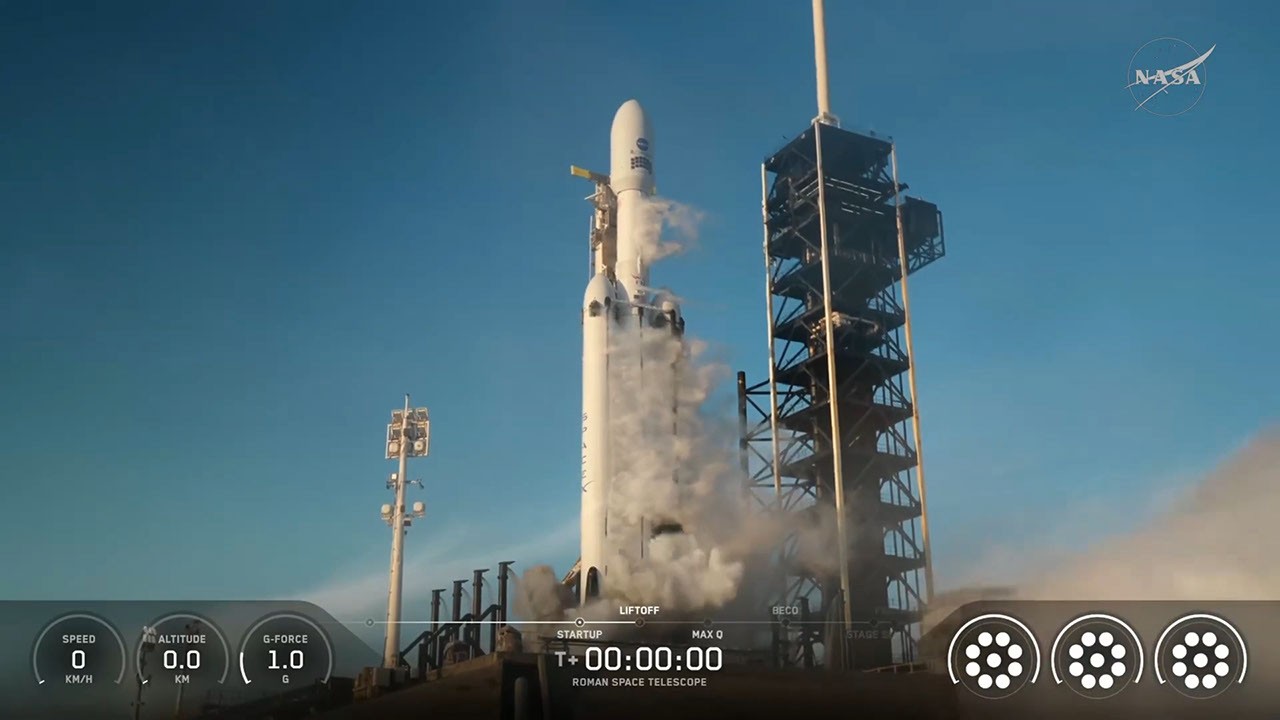
Roman Space Telescope Launch
NASA launches Roman Space Telescope to study universe, dark energy
Introduction To The Roman Space Telescope
The Nancy Grace Roman Space Telescope (RST) has been launched into space to study the universe, equipped with a main mirror of the same size as the Hubble Space Telescope (HST) but capable of seeing 100 times more sky during each snapshot. This is made possible by the RST's more curved main mirror, closer secondary mirror, and larger main camera compared to the HST. The RST will orbit the Sun, not the Earth, and is expected to discover many more supernovas and planets orbiting other stars, providing valuable insights into the expansion rate and composition of the universe.Launch And Capabilities
The RST was launched from Kennedy Space Center, Florida, USA, aboard a SpaceX Falcon Heavy rocket. The telescope is named after Nancy Grace Roman, NASA's first chief astronomer, and is the final member of a trio of complementary sky-mapping observatories, including the US-led Vera C. Rubin Observatory in Chile and Euclid, a space telescope launched by the European Space Agency. The RST's unique capability is taking frequent, deep images in the infrared, with its 300-megapixel camera, allowing it to peer into the universe's deep past and observe highly reddened galaxies.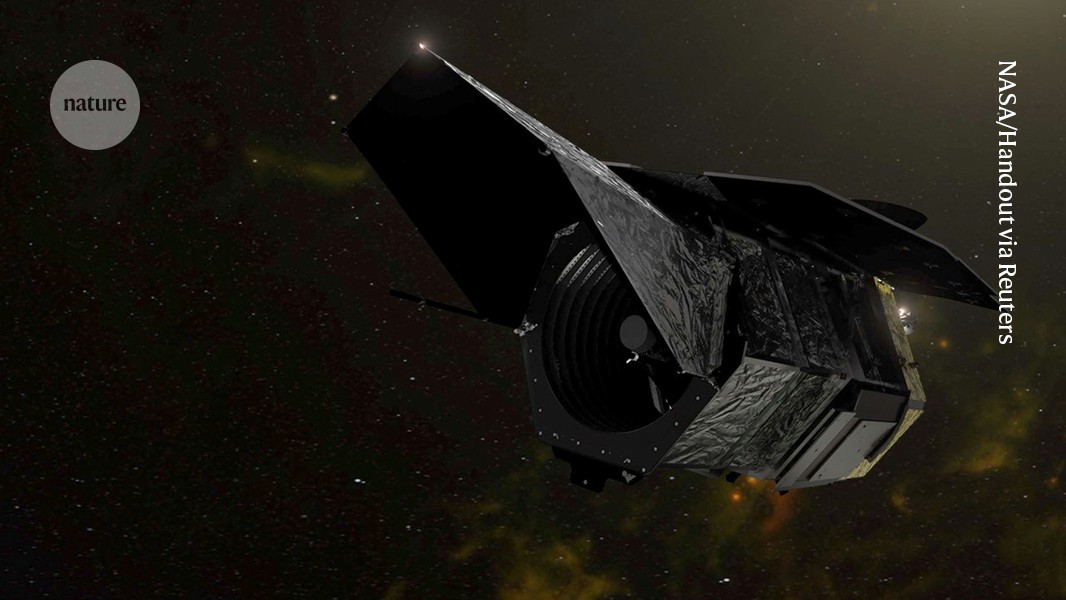
Scientific Objectives
The RST's primary objectives include studying the nature of dark energy, the force causing the universe's expansion, and mapping the universe's galaxies in 3D. By reconstructing the expansion history of the universe, cosmologists can understand whether the push of dark energy has been uniform or has changed over space and time. The telescope will also map an unprecedented 20 billion stars in the Milky Way, including many inside and beyond the galaxy's dusty central region.
Comparison With Other Telescopes
The RST's field of view is roughly 100 times bigger than that of the Hubble Space Telescope, and its sensitivity to infrared light allows it to observe objects that are difficult for other telescopes to see. The James Webb Space Telescope (JWST), also an infrared observatory, has a field of view 100 times smaller than the RST's. The RST's unique capabilities make it an essential tool for astronomers, enabling them to study the universe in unprecedented detail.
Future Outlook
The RST is expected to yield a wealth of discoveries, from insight into the nature of dark energy to millions of stars in the Milky Way and the planets that orbit them. With its unprecedented capabilities, the RST will revolutionize the field of astronomy, providing astronomers with a new tool to study the universe in unprecedented detail. As Tony Tyson, a physicist at the University of California, Davis, says, "It's going to be revolutionary."
Conclusion
The launch of the Nancy Grace Roman Space Telescope marks a new era in astronomy, enabling scientists to study the universe in unprecedented detail. With its unique capabilities and unprecedented field of view, the RST is expected to make groundbreaking discoveries, shedding new light on the nature of dark energy, the expansion of the universe, and the possibilities for life elsewhere in the universe.Sources
This is an original synthesis by Qivorane based on reporting from the outlets below.