
James Webb Telescope Finds Rare Star
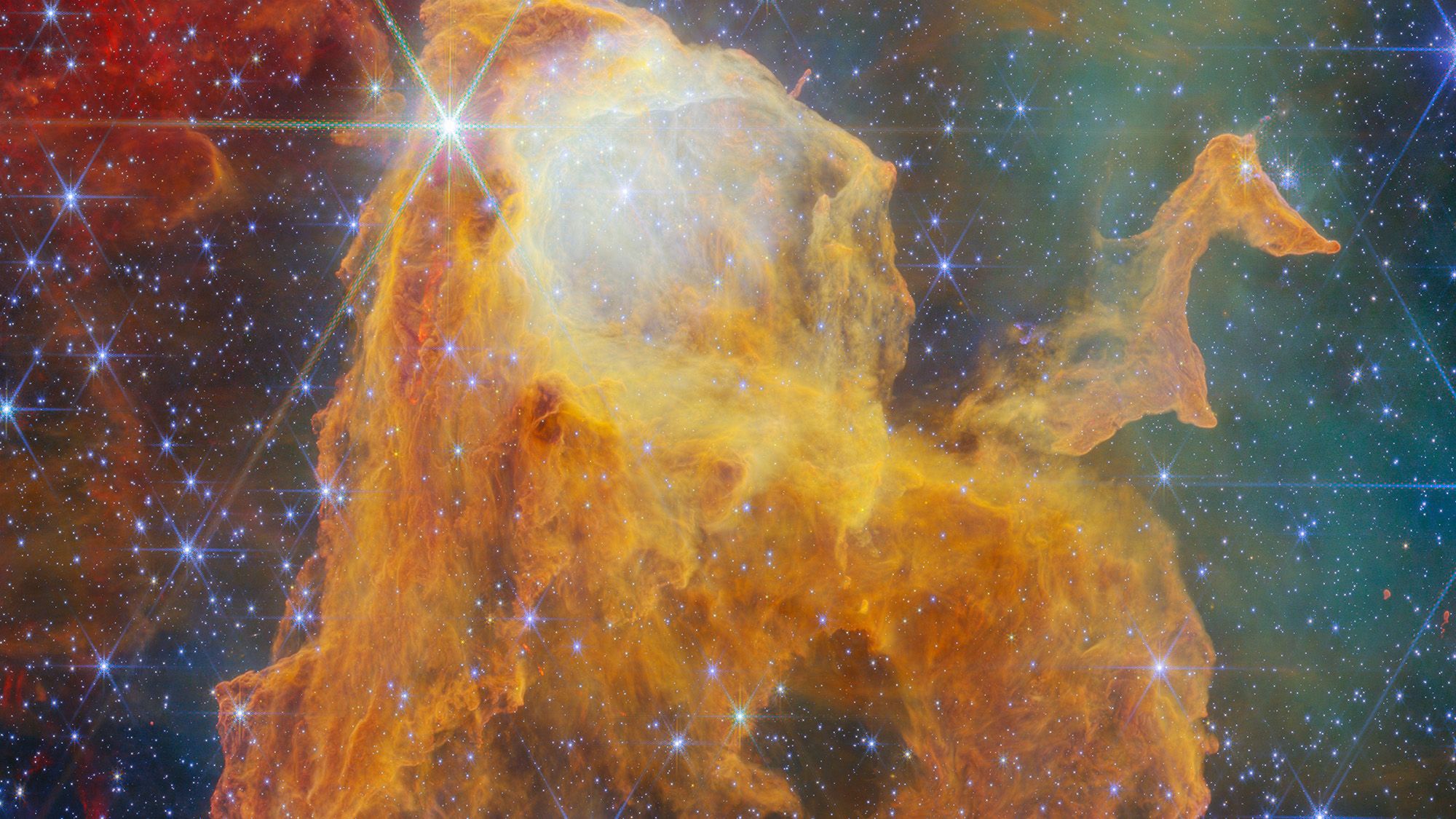
James Webb Space Telescope captures image of rare O-type star in Treasure Chest globule
Introduction To The Treasure Chest
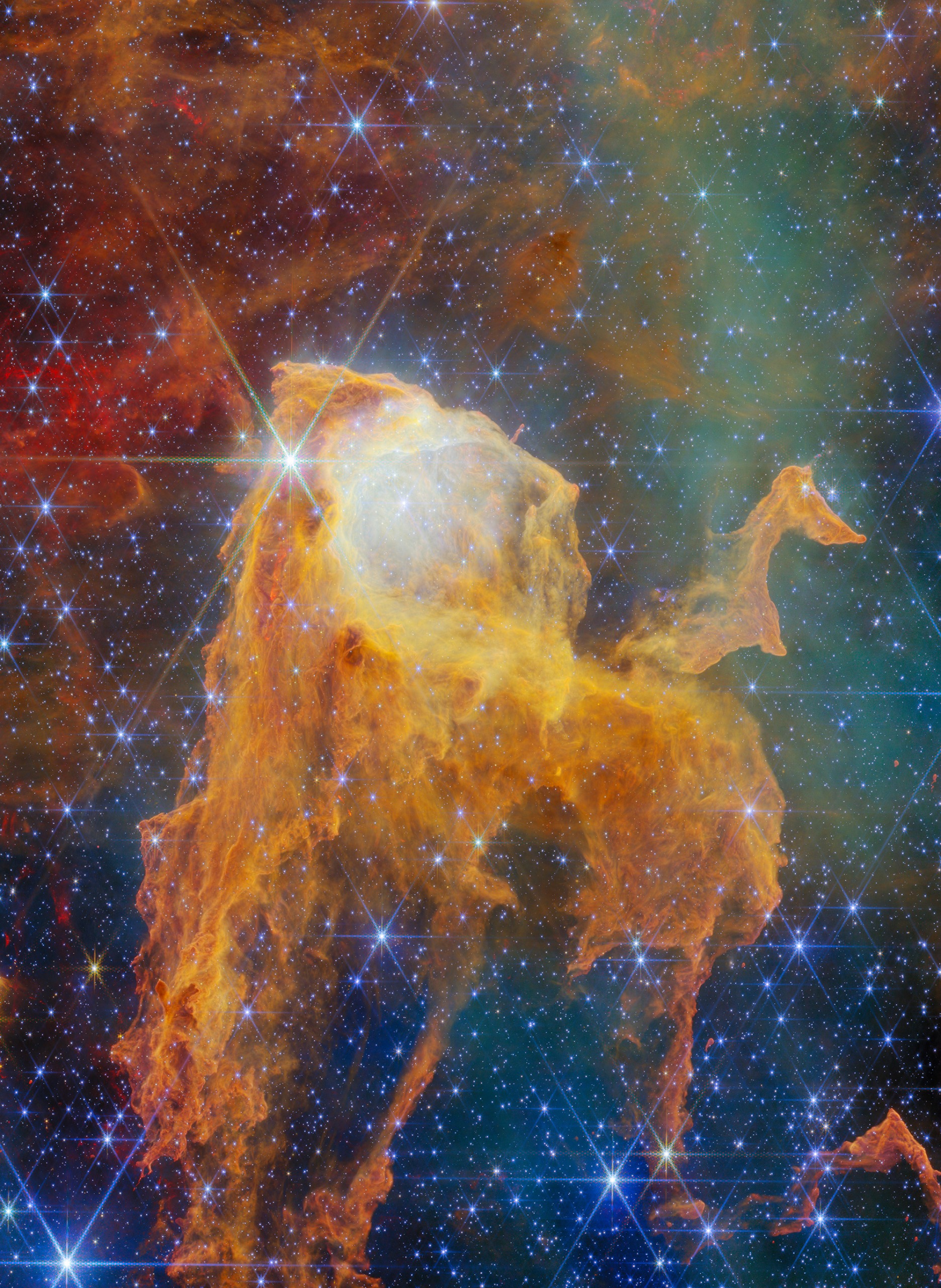
The James Webb Space Telescope has captured a stunning image of the "Treasure Chest," a cometary globule in the star-forming Carina Nebula. This colorful cloud of gas and dust is located about 7,500 light-years away in the Southern Hemisphere constellation Carina and contains dozens of newborn suns. The image reveals a compact cluster of about 70 young stars embedded in the dust, with the most massive one being a rare O-type star, roughly 19 times as massive as the sun.
Understanding Cometary Globules
Cometary globules are isolated clouds with a dense, dark head and a sweeping tail, resembling comets. However, the Treasure Chest looks more like a wooden chest with its lid propped open and light spilling from inside. These objects are formed when a dense cloud of gas and dust is compressed by the radiation and winds from nearby massive stars. The Treasure Chest's unusual shape is also influenced by the nearby Eta Carinae, the most luminous object in the Carina Nebula, which is about 39 light-years away.
The Role Of Eta Carinae
Eta Carinae is a massive star system that contains at least two stars, including one about 100 times as massive as the sun and roughly 5 million times as luminous. In the 19th century, it underwent its "Great Eruption," when it briefly became one of the brightest stars in Earth's night sky. The intense radiation and stellar winds from Eta Carinae, combined with the nearby Trumpler 16 star cluster, are blasting away the Treasure Chest's less-dense gas and helping to sculpt the cloud into its distinctive shape.
The Fate Of The Treasure Chest
The Treasure Chest won't always look like this. Radiation and winds from the young stars inside it, combined with the assault from massive stars nearby, will gradually erode the remaining gas and dust. Eventually, the cosmic chest will disappear, revealing its true jewels – the stars within it. Astronomers estimate that the cluster is around 1.3 million years old, although earlier estimates suggested it could be as young as 100,000 years. Many of its stars are still surrounded by the gas and dust from which they were born, which will be dispersed over time.
Conclusion And Future Outlook
The James Webb Space Telescope's image of the Treasure Chest provides a unique glimpse into the formation of stars in our galaxy. The discovery of the rare O-type star and the compact cluster of young stars embedded in the dust offers valuable insights into the processes that shape the evolution of star-forming regions. As the telescope continues to explore the universe, it is likely to uncover more secrets about the formation and evolution of stars and galaxies, shedding light on the mysteries of the cosmos.
Sources
This is an original synthesis by Qivorane based on reporting from the outlets below.