
Hubble Captures Cosmic Cycle
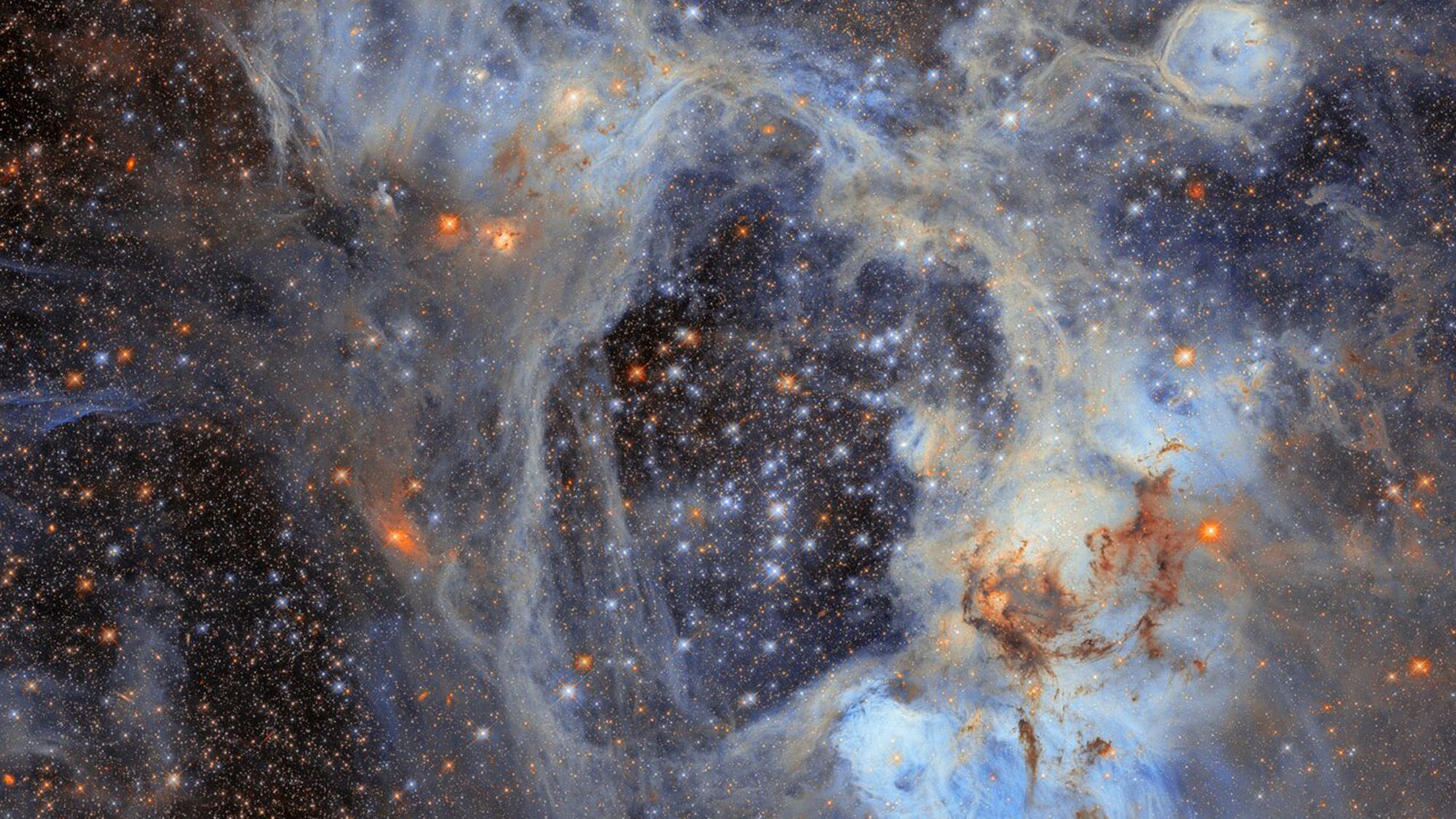
Hubble Space Telescope image shows destruction and creation in N44 nebula
Introduction To Cosmic Cycles
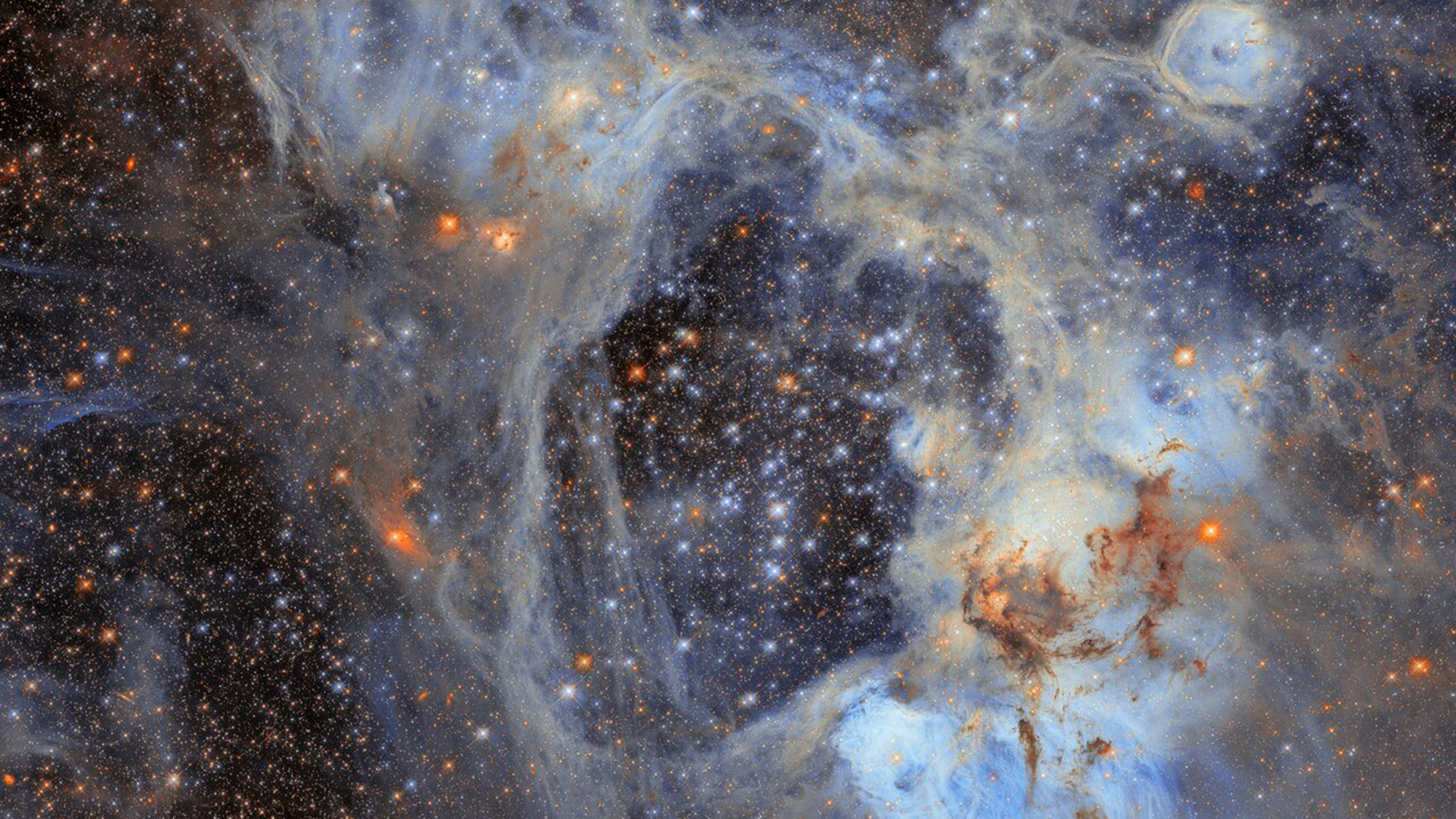
The Hubble Space Telescope has captured a haunting image of the N44 nebula, located in the Large Magellanic Cloud, a small galaxy that orbits the Milky Way. This spectacular image showcases a cosmic cycle of destruction and creation, where one generation of stars is tearing apart its birthplace while simultaneously helping a new generation form. The N44 nebula, also known as LHA 120-N44, is approximately 160,000 light-years away in the constellation Dorado and appears as a gigantic hole punched through a cloud.
Understanding Superbubbles
The N44 nebula is known as a superbubble, a cavity carved out by a cluster of hot, massive stars near its center. These stars are bent on destruction, with powerful winds that blast material into space, similar to our star's solar wind, which creates auroras on Earth and defines the extent of the solar system. The most massive of these stars eventually explode as supernovas, pushing even more gas aside. The collective radiation from both these old and young stars carves the nebula's giant cavity, which measures roughly 210 by 140 light-years.
Stellar Feedback And Star Formation
The expelled gas from the superbubble is pushed outward and compressed into a dense shell of gas and dust surrounding the cavity. Within this shell, new stars are forming, demonstrating the concept of "stellar feedback." This occurs when massive stars heat, ionize, and disperse the gas and dust around them, making star formation impossible in their vicinity. However, their winds can squeeze neighboring gas clouds until they become dense enough to collapse under their own gravity and make new stars. This process highlights the complex and dynamic nature of star formation, where the destruction of one generation of stars can lead to the creation of another.
Observing Star Formation
The Hubble image of N44 contains almost half a million stars, including those in the nebula and some lying along the same line of sight. Approximately 30,000 of these stars are young stars yet to fuse hydrogen in their cores, the reaction that powers stars like the sun. The presence of so many young protostars in N44 provides astronomers with a rare opportunity to study the process of star formation and attempt to answer the question of how long it takes to make a star. By observing these young stars, scientists can gain insights into the early stages of star formation and the factors that influence the development of new stars.
Implications And Future Outlook
The study of the N44 nebula and its superbubble offers valuable insights into the cosmic cycle of destruction and creation. The process of stellar feedback and star formation is complex and dynamic, with massive stars playing a crucial role in shaping their surroundings. Further research into this phenomenon can help scientists better understand the evolution of galaxies and the formation of new stars. The Hubble Space Telescope's image of N44 serves as a reminder of the awe-inspiring beauty and complexity of the universe, and the many mysteries that remain to be uncovered.
Sources
This is an original synthesis by Qivorane based on reporting from the outlets below.