
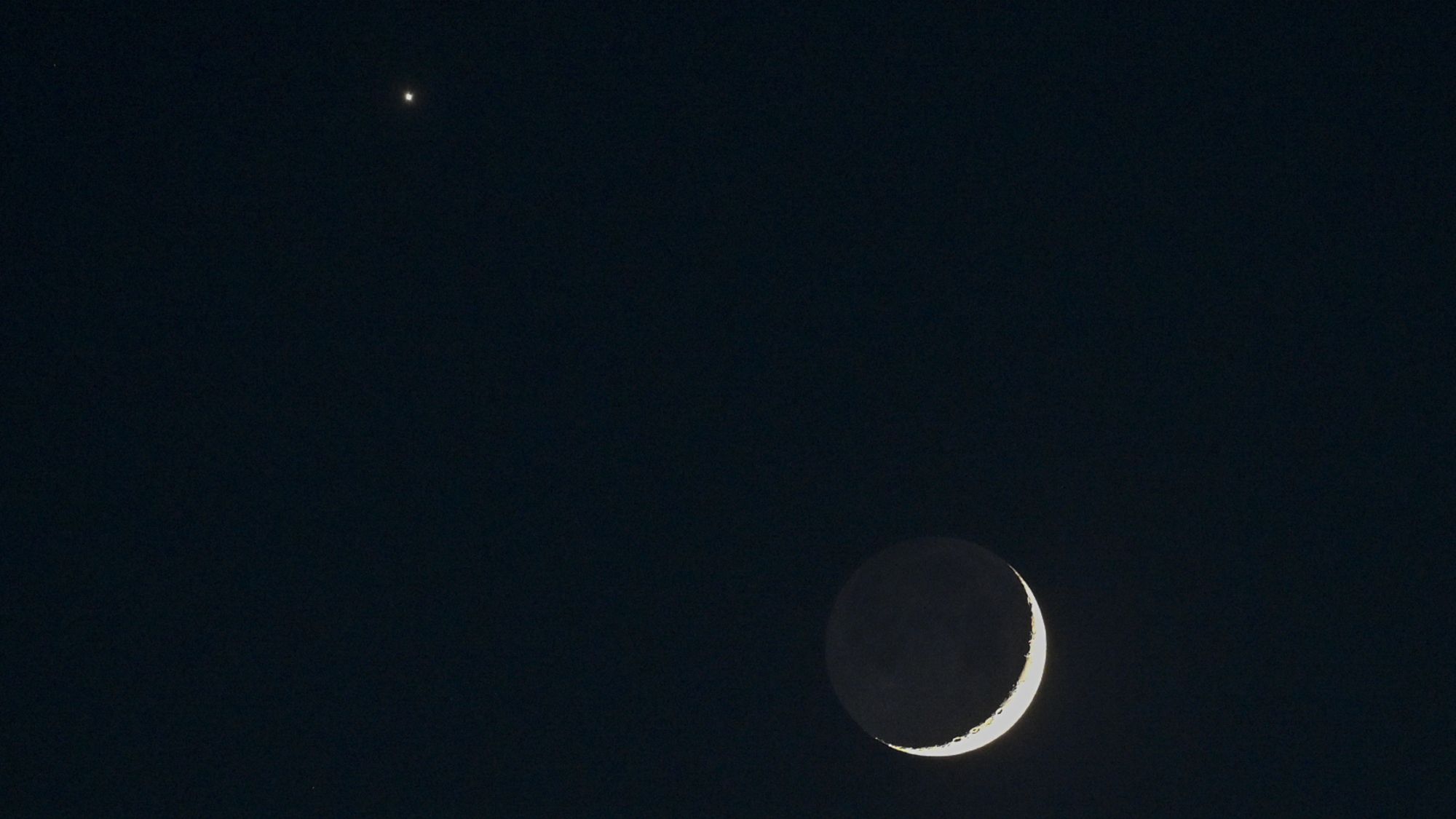
Venus Shines Beside Crescent Moon
Venus appears close to the crescent moon at sunset, a rare celestial event
Introduction To A Rare Celestial Event
Venus, often referred to as "Earth's twin" due to its similar size and rocky composition, will shine close to the waxing crescent moon at sunset on September 13. This encounter is a prelude to an even closer meeting the following day, when the moon will pass directly in front of Venus for observers across parts of Europe, Africa, and Asia. To witness this rare celestial event, look west at sunset and find a spot with a clear view to the west to give yourself the best chance at catching the solar system pairing before they follow the sun out of view.
Observing The Celestial Pairing
Tonight, Venus will appear as a bright "Evening Star," a little over 5 degrees from the 9%-illuminated waxing moon — roughly the width of your three middle fingers held at arm's length against the evening sky. The moon and Venus will shine less than 10 degrees above the horizon at dusk, so it's essential to find a spot with an unobstructed view to the west. You can discover the exact timings for sunset for your location using Time and Date's sunset tracker. As you observe the celestial pairing, look out for earthshine brightening the unlit side of the lunar disk, as sunlight reflects off our planet to bathe the moon in a subtle glow.
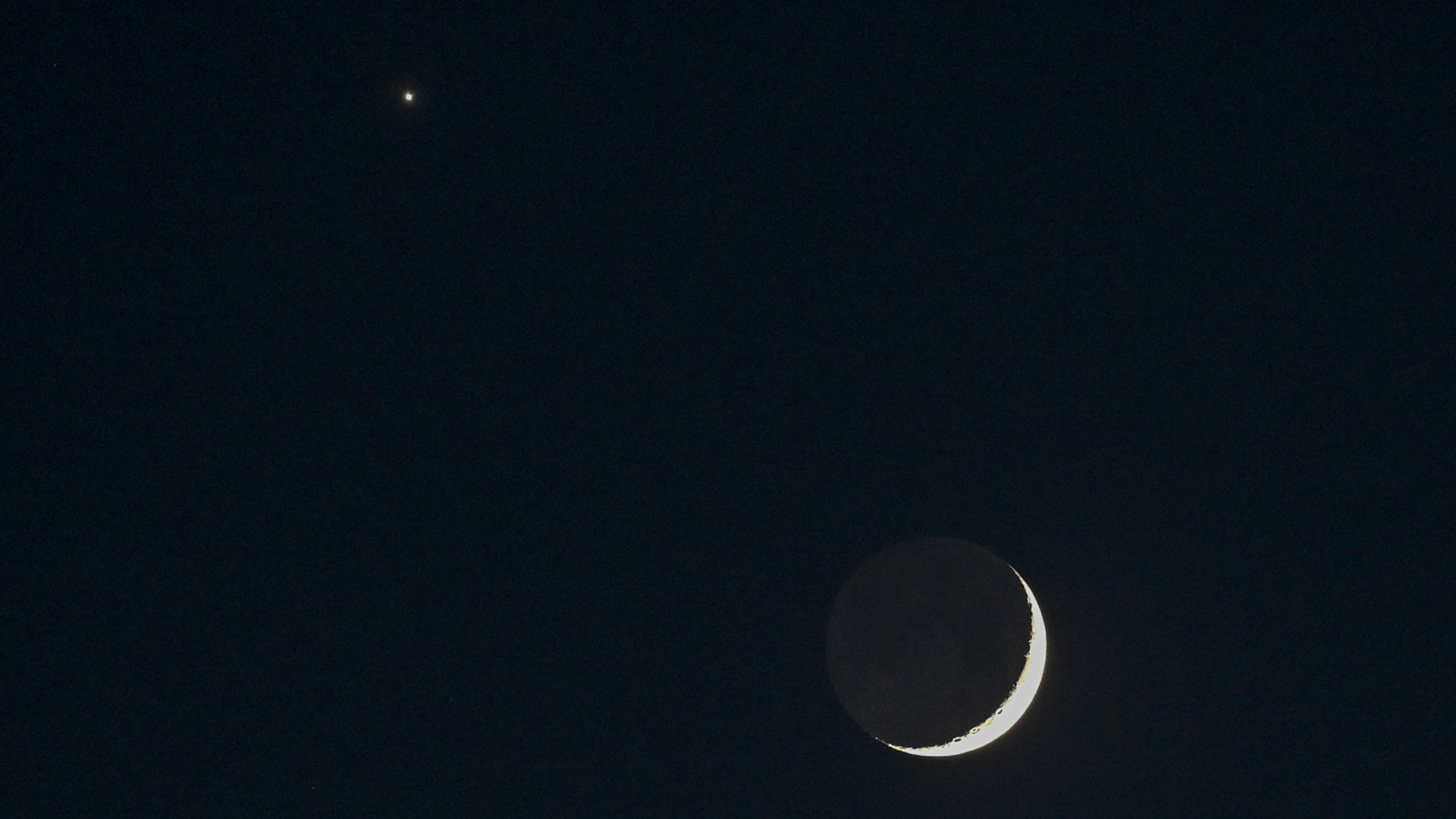
Occultation Of Venus By The Moon
Millions of stargazers across parts of Europe, North Africa, the Middle East, and southern India will be positioned to see the moon pass directly in front of Venus in the daytime sky starting at 5:26 a.m. EDT (0926 GMT) on September 14. However, it's crucial to remember that it's never safe to point a telescope or binoculars at the sun, as doing so can lead to permanent damage to your vision. The moon and Venus will be below the horizon for viewers in the U.S. as the occultation takes place.
Photographing The Celestial Event
If you're interested in capturing the crescent moon near Venus, consider using a DSLR or mirrorless camera with the right lenses. You can check out guides on photographing the lunar surface and roundups of the best lenses and camera bodies for astrophotography. Additionally, if you would like to share your astrophotography with others, you can send your photos, comments, and your name and location to spacephotos@space.com.

Future Celestial Events
By the evening of September 15, the waxing crescent will appear to have leapt to the left of Venus as it nears the point of maximum brightness in its current evening apparition on September 18. This rare celestial event is a great opportunity for stargazers to observe the beauty of the solar system and appreciate the unique alignment of the planets.
Sources
This is an original synthesis by Qivorane based on reporting from the outlets below.