

Exotic Pines Grow Faster
Exotic pines in the Southern Hemisphere grow faster and are more drought-resistant, study reveals
Introduction To Exotic Pines
Exotic pines in the Southern Hemisphere have been found to grow faster and are more drought-resistant than those in the Northern Hemisphere, according to a new study published in the journal Nature. The research, led by Dr. Alex Fajardo, analyzed the growth rings of nine conifer species from the Pinaceae family, all native to the Northern Hemisphere, and found that they reached growth rates up to four times higher than those of populations in the Northern Hemisphere. This discovery challenges one of the most deeply rooted ideas in plant ecology: that plants that grow rapidly generally have a lower capacity to tolerate water stress.Background And Methodology
The study analyzed 192 sites distributed across the Americas, Europe, Africa, and Oceania, including Chile, where the researchers conducted sampling in the central and southern parts of the country. Increment cores were extracted from the trees to determine annual growth-ring widths, which are closely related to climate. The researchers also extracted increment cores from trees of Nothofagus species growing adjacent to pine plantations in the Southern Hemisphere. The team found that exotic conifers had higher concentrations of carbon reserves, also known as nonstructural carbohydrates, which play essential roles in plants and have been associated with a greater capacity to cope with periods of water stress.Key Findings And Implications
The overall results showed a marked difference in the growth rates and drought tolerance of exotic conifers in the Southern Hemisphere compared to those in the Northern Hemisphere. The team found that populations in the Southern Hemisphere showed greater resistance and resilience during dry periods, with their growth being less affected during droughts and having a greater capacity to recover after these events. This paradoxical combination of high growth rates yet resilience to drought emphasizes the importance of integrating eco-evolutionary history into ecological theory and is relevant for assessing the ultimate role of afforestation as global carbon sinks.
Mechanisms And Future Outlook
The researchers also found that the carbon isotope signature in exotic conifers was consistent with lower stomatal limitations on photosynthesis, which could help explain their higher growth rates and drought tolerance. The study's findings have important implications for our understanding of how exotic species respond to environmental conditions outside their natural range and highlight the need for further research into the mechanisms underlying their growth and drought tolerance. As the world continues to grapple with the challenges of climate change, understanding how exotic species can thrive in new environments could provide valuable insights for conservation and ecosystem management efforts.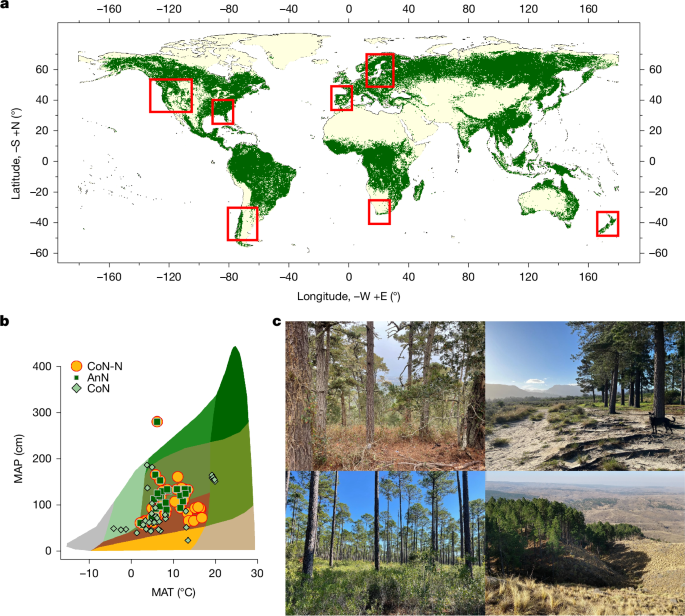
Comparison And Context
The study's findings are consistent with other research on the growth and drought tolerance of exotic species in the Southern Hemisphere. For example, a study published in Nature News found that conifers native to the Northern Hemisphere that have been planted at massive scales in the Southern Hemisphere do not appear to show the same magnitude of growth decline or mortality as in their native ranges. The study's use of a standardized dendrochronological survey at 192 sites across four continents provides a unique perspective on the growth and drought tolerance of exotic conifers in the Southern Hemisphere.
Conclusion And Future Directions
In conclusion, the study's findings highlight the importance of considering the eco-evolutionary history of exotic species when predicting their growth and drought tolerance in new environments. The discovery that exotic pines in the Southern Hemisphere can grow faster and be more drought-resistant than those in the Northern Hemisphere has significant implications for our understanding of plant ecology and conservation biology. Further research is needed to fully understand the mechanisms underlying the growth and drought tolerance of exotic conifers in the Southern Hemisphere and to explore the potential applications of this knowledge for ecosystem management and conservation efforts.Sources
This is an original synthesis by Qivorane based on reporting from the outlets below.