
Ancient Skeleton Found In Roman Jar
1,600-year-old skeleton discovered in Bulgaria, likely hid from enemy attack
Introduction To Ancient Discovery
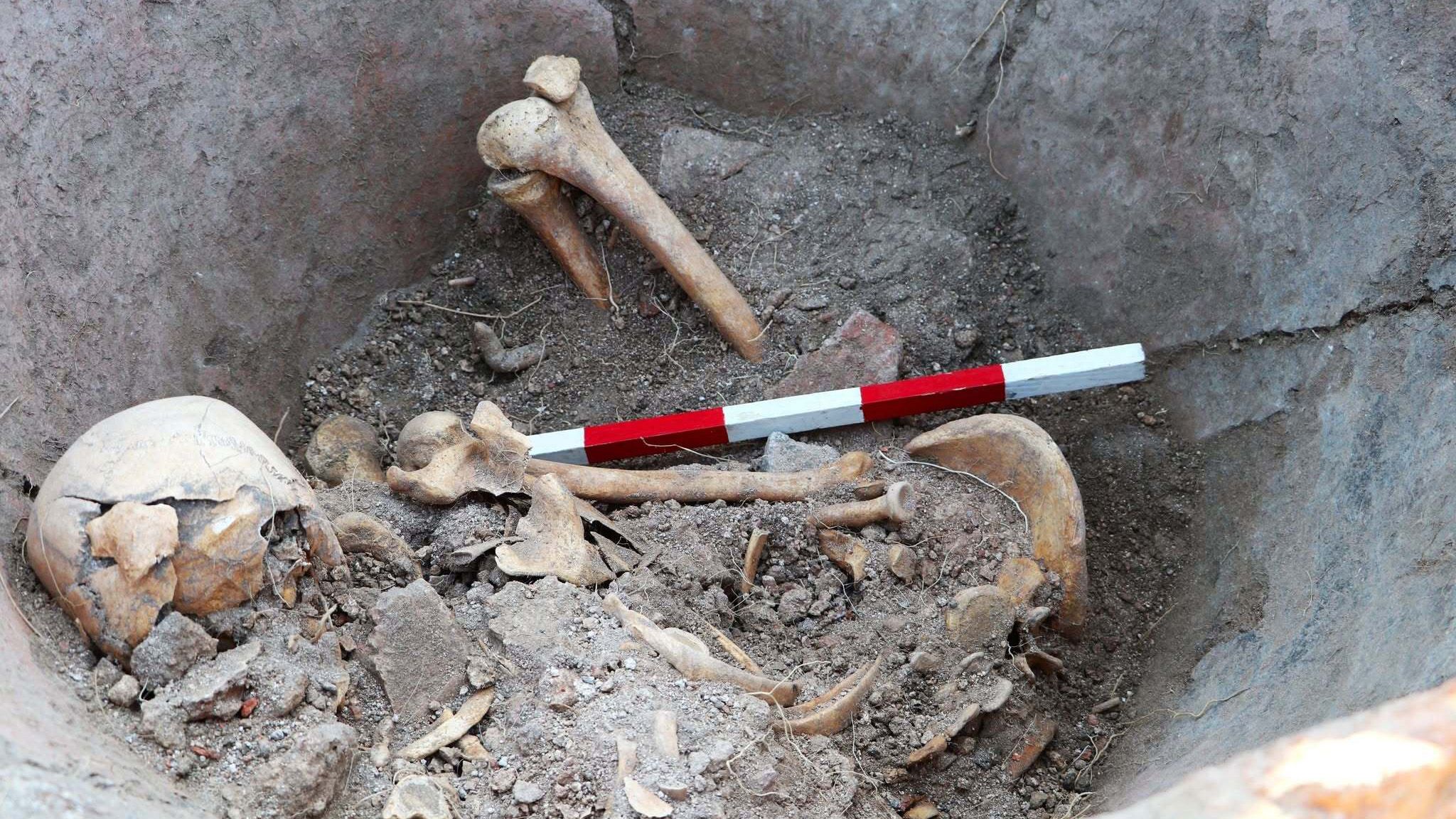
A remarkable archaeological discovery has been made in Bulgaria, where a 1,600-year-old skeleton was found inside a giant Roman jar, known as a dolium. The individual, believed to be a young man, likely hid in the vessel to escape an enemy attack, but unfortunately died as a fire swept through the area. This extraordinary finding provides a unique glimpse into the life and death of someone living in the Roman colony of Deultum during a time of great turmoil.
Background Context Of Deultum
The Roman colony of Deultum, located in modern-day Bulgaria, was a significant settlement during the Roman Empire. In the fourth and fifth centuries, the region faced numerous attacks from East Germanic tribes and Huns, making it a challenging time for its inhabitants. The discovery of the skeleton in the dolium suggests that the individual may have been trying to escape one of these attacks, but ultimately succumbed to the fire that ravaged the area. 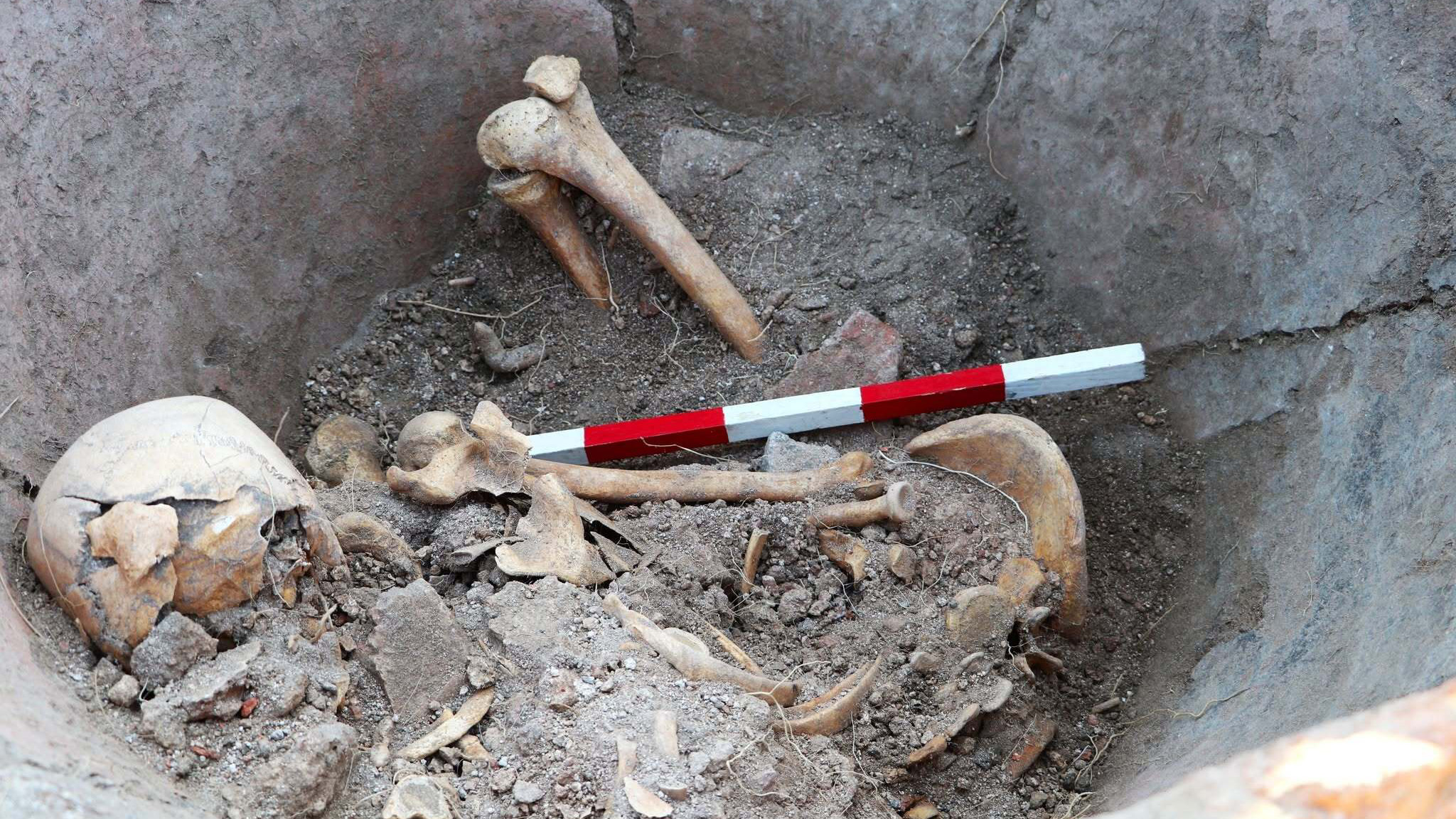
Experimental Methodology And Findings
The archaeological team, led by Lyudmil Vagalinski, discovered the giant jar in a Late Roman turret, or small tower, on August 10. The dolium, which was approximately 3 feet in diameter, contained the skeleton, two iron knives, and a belt. The team also found a significant amount of burned materials around the vessel, including ashes, coals, and broken bricks, indicating that a fire had swept through the area. The presence of ashes under the skeleton suggests that the individual entered the dolium after the fire had already begun. 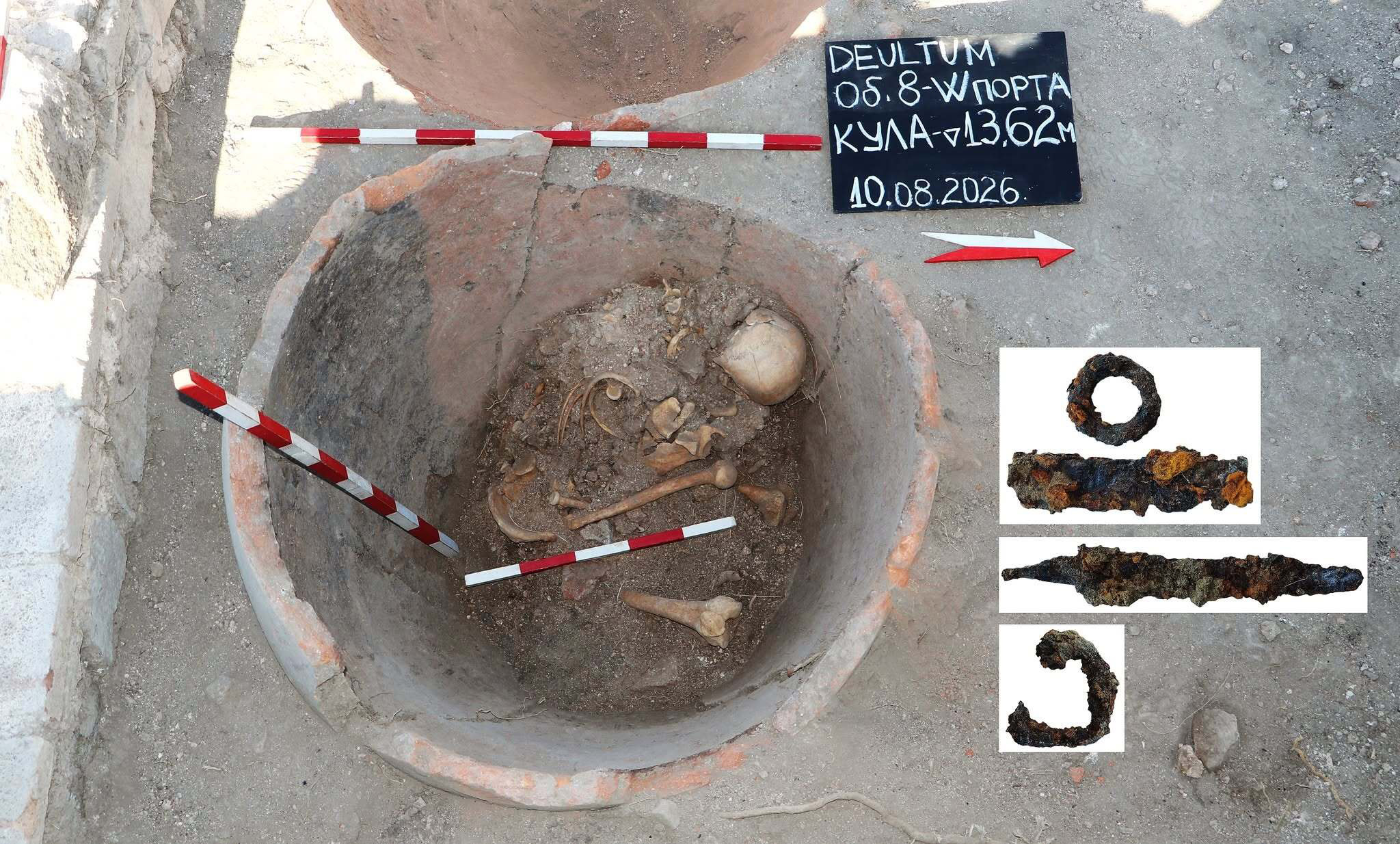
Real-World Implications And Future Outlook
The discovery of the skeleton in the dolium provides valuable insights into the life and death of someone living in Deultum during a time of great turmoil. The finding suggests that the individual was likely a young man who was trying to escape an enemy attack, but ultimately died in the fire. The presence of two iron knives and a belt indicates that the individual was prepared to defend himself, but was unable to escape the fire. The team's preliminary analysis dates the event to approximately A.D. 400, although further analysis is needed to determine a more precise date. This discovery highlights the importance of continued archaeological research in the region, which can provide a unique window into the past and help us better understand the lives of people living in ancient times.
Conclusion And Significance
The discovery of the 1,600-year-old skeleton in the giant Roman jar is a significant finding that provides a unique glimpse into the life and death of someone living in Deultum during a time of great turmoil. The finding highlights the importance of continued archaeological research in the region and demonstrates the value of interdisciplinary collaboration in uncovering the secrets of the past. As researchers continue to analyze the findings, they may uncover even more insights into the life and death of this individual, providing a fascinating glimpse into ancient history.
Sources
This is an original synthesis by Qivorane based on reporting from the outlets below.