
Saturn's Mysterious Decagon
Astronomers discover 10-sided cloud structure at Saturn's south pole, similar to hexagon at north pole
Introduction To Saturn's Mysterious Decagon
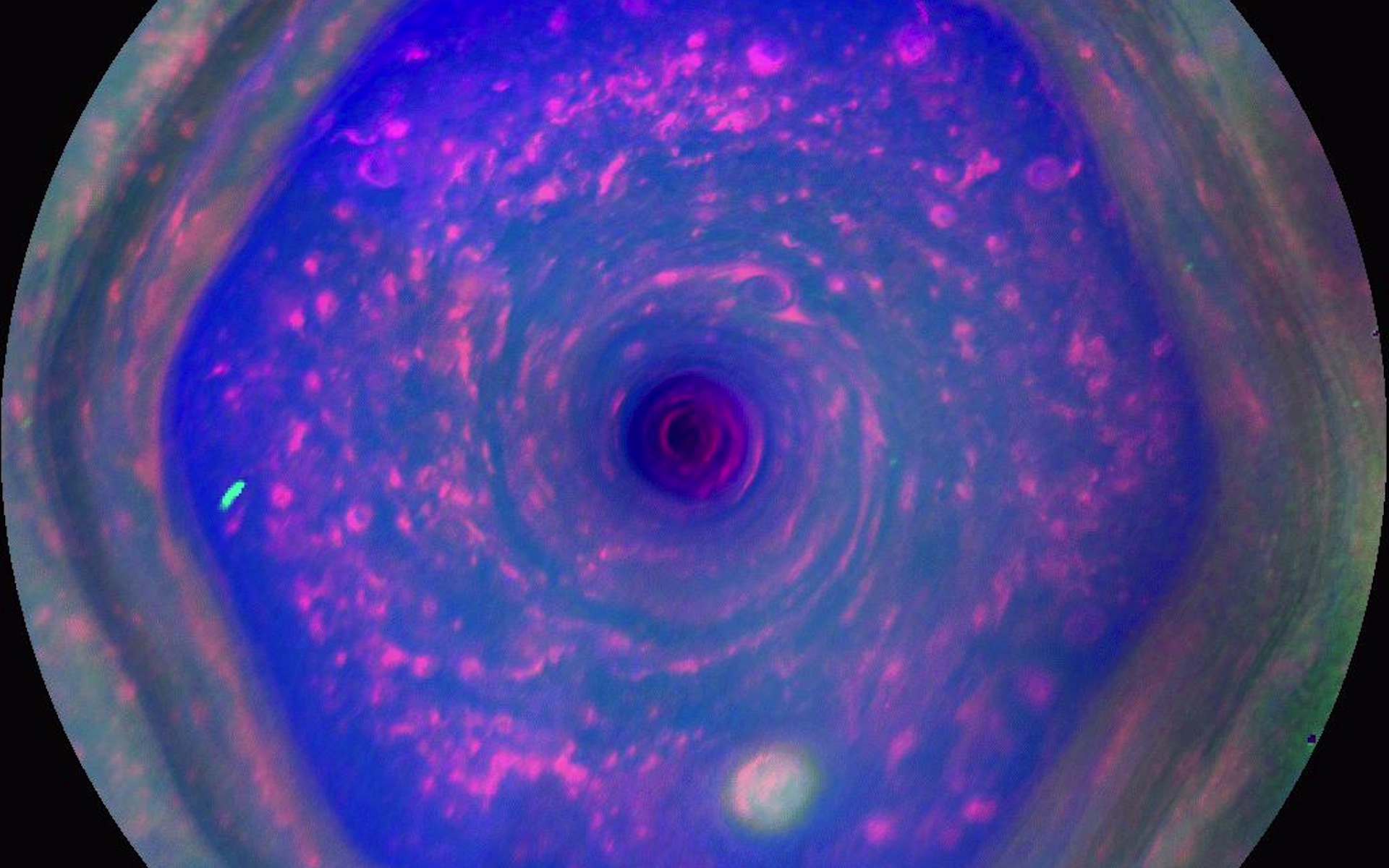
Astronomers have discovered a mysterious 10-sided cloud structure, known as a decagon, at Saturn's south pole. This newfound structure joins the bizarre colossal hexagon seen for decades at Saturn's north pole. The decagon is approximately 104,250 miles wide, with each of its 10 sides measuring about 10,425 miles long. Researchers investigated recent images of Saturn captured with NASA's Hubble Space Telescope, which revealed the decagon to scientists for the first time in 2023.
Background And Discovery
The discovery of the decagon was possible because Saturn's changing seasons gradually brought the planet's south pole back into view from Earth. Astronomers who collectively analyze images of Saturn from ground-based observatories first identified the structure in 2024. The Hubble Space Telescope's view from space offers unmatched image sharpness and spatial resolution over full rotations of Saturn, without smearing by Earth's atmosphere. 
Scientific Mechanisms And Research Methodology
Researchers used shallow water model simulations to understand how atmospheric conditions led to the wave's development. The simulations represented a simplified version of Saturn's troposphere, the lowest atmospheric layer where weather patterns are shaped. The researchers concluded that the wave may have been created by a spatially periodic disturbance in a zonal jet stream or driven by a swirling vortex that might be near a Red Spot, a storm system. The decagon moves slowly, taking about 800 days to complete a rotation about Saturn.
Real-World Implications And Future Outlook
The discovery of the decagon has significant implications for our understanding of Saturn's atmosphere and the formation of large-scale weather patterns. The fact that the decagon is still evolving and varies in darkness across its features suggests that it may be unstable or still developing. Further studies are needed to understand how the decagon evolves and whether it will become more stable or break up over time. 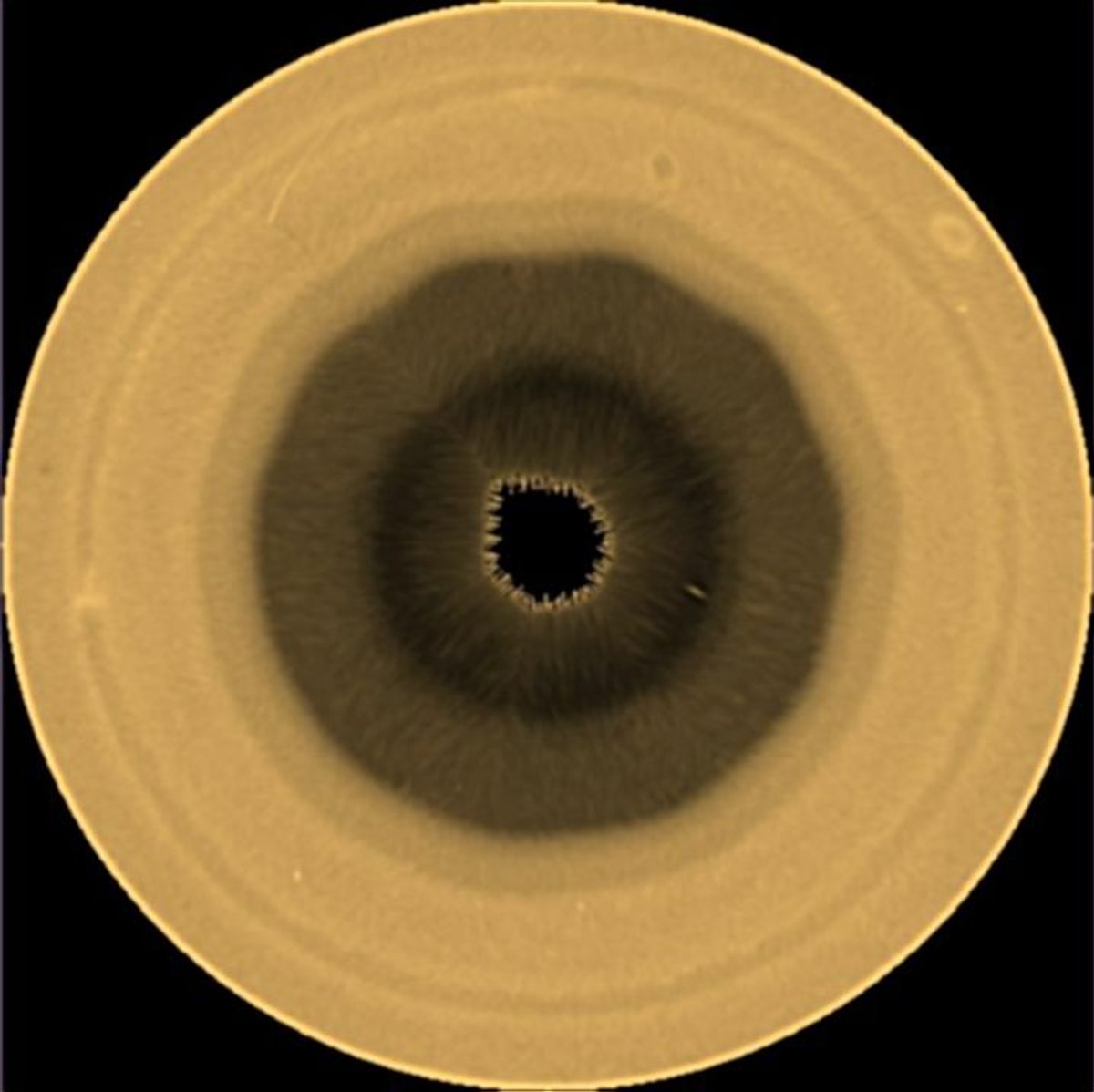
Comparison With Saturn's Hexagon
The decagon is similar to the hexagonal weather pattern at Saturn's north pole, but it is also distinctly different. The hexagon has been stable for over 40 years, while the decagon appears to be strengthening and evolving. The discovery of the decagon raises questions about the differences between the two structures and how they are formed. Researchers are eager to continue studying the decagon and its evolution, using telescopes such as the James Webb Space Telescope to gain a deeper understanding of Saturn's atmosphere and weather patterns.
Sources
This is an original synthesis by Qivorane based on reporting from the outlets below.
- [1] Space.com: Astronomers discover mysterious 10-sided cloud structure at Saturn's south pole
- [2] Phys.org: Hubble tracks new decagon encircling Saturn's south pole
- [3] Discover Magazine: Hubble Images Uncover Massive 10-Sided Wave Brewing at Saturn's South Pole
- [4] Scientific American: Scientists discover a mysterious wave shaped like a decagon in Saturn’s atmosphere
- [5] NASA Breaking News: NASA’s Hubble Tracks New Decagon Encircling Saturn’s South Pole
- [6] New Scientist: Saturn has a big, weird decagon around its south pole
Additional coverage: