
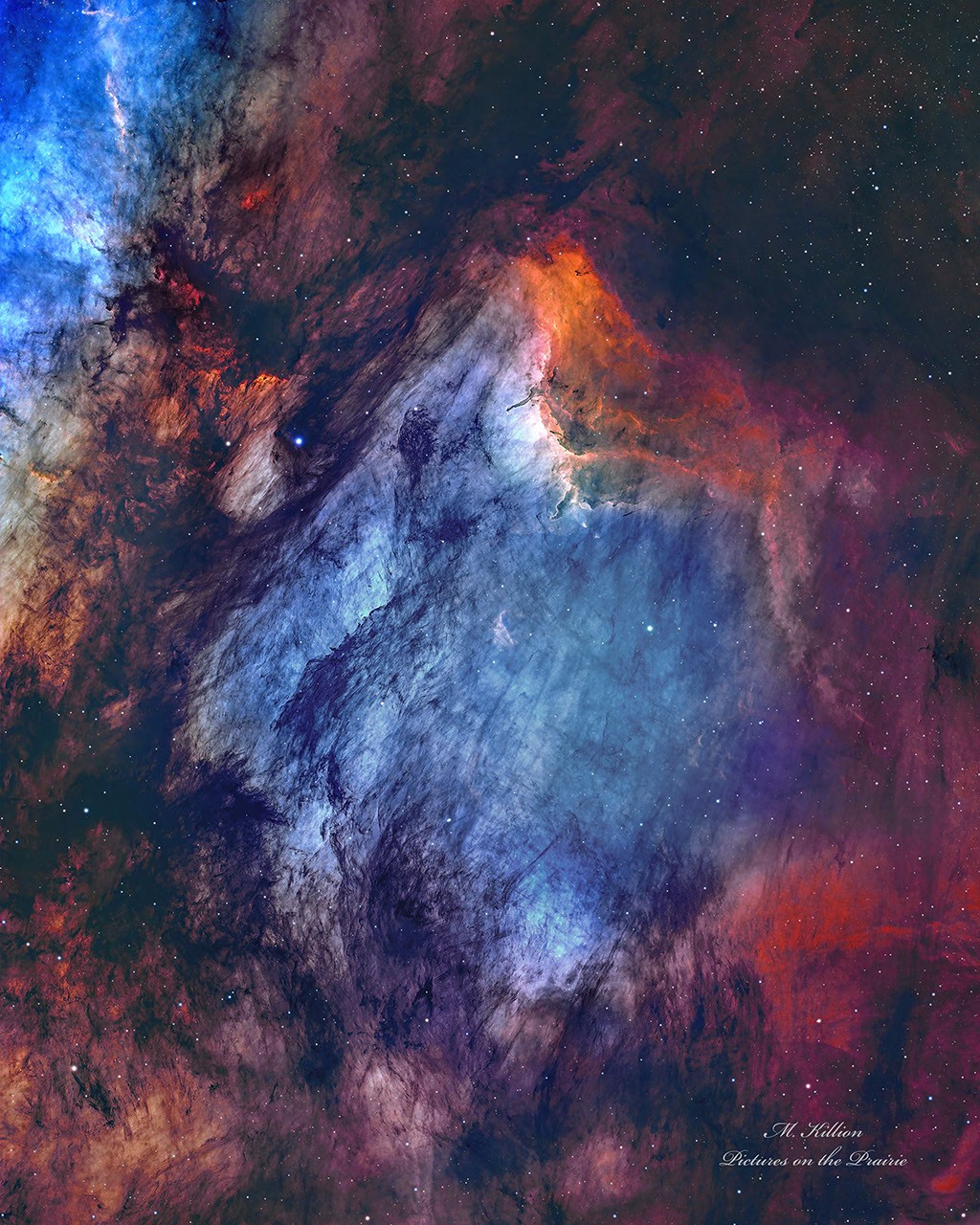
Pelican Nebula Transformation
The Pelican Nebula is slowly being transformed by young stars, description
Introduction To The Pelican Nebula
The Pelican Nebula, also known as IC 5070, is a fascinating region of space that is currently undergoing significant transformation. Located near the larger North America Nebula, the Pelican Nebula is a complex mix of gas, dust, and stars that is being slowly altered by the intense light emitted by young, energetic stars. This process of transformation is not only changing the appearance of the nebula but also providing scientists with a unique opportunity to study the formation of stars and the evolution of gas clouds.
Structure And Composition
The Pelican Nebula is divided from the North America Nebula by a molecular cloud filled with dark dust. This cloud is responsible for the distinctive shape of the Pelican Nebula, which is characterized by dense tentacles of cold gas. The nebula is also home to a variety of stars, including young, energetic stars that are emitting intense light and heat. This light is slowly transforming the cold gas in the nebula into hot gas, creating an advancing boundary known as an ionization front. The ionization front is visible in bright orange on the upper right side of the nebula and is a key feature of the Pelican Nebula's transformation.
Star Formation And Evolution
The Pelican Nebula is a particularly active region of star formation, with many young stars currently in the process of forming. The light emitted by these stars is not only transforming the gas in the nebula but also providing the energy needed to sustain the formation of new stars. As the gas in the nebula is transformed, it is likely that the formation of new stars will slow down, and the nebula will begin to take on a new shape. In millions of years, the Pelican Nebula may no longer be recognizable as the distinctive shape we see today, as the balance and placement of stars and gas will have changed significantly.
Observation And Study
The Pelican Nebula has been the subject of extensive study, with scientists using a variety of techniques to observe and analyze the nebula. One such technique is deep exposure photography, which involves taking long exposures of the nebula to bring out its intricate details. A recent image of the Pelican Nebula, taken from Utah, USA, incorporates 25 hours of exposure and provides a stunning view of the nebula's filamentary dust and star formation. By studying the Pelican Nebula and other similar regions of space, scientists can gain a better understanding of the processes that shape the formation of stars and the evolution of gas clouds.
Future Outlook
As the Pelican Nebula continues to evolve, it is likely that scientists will remain interested in studying this region of space. The transformation of the nebula provides a unique opportunity to observe the formation of stars and the evolution of gas clouds in real-time. By continuing to study the Pelican Nebula, scientists can gain a better understanding of the complex processes that shape the universe and provide new insights into the formation of stars and galaxies. The Pelican Nebula is bounded by the dark nebula LDN 935, which will likely play a role in shaping the nebula's future evolution.
Sources
This is an original synthesis by Qivorane based on reporting from the outlets below.