
Elemental Origins In The Universe
Discover the fascinating origins of elements in the universe, from hydrogen to gold
Introduction To Elemental Origins
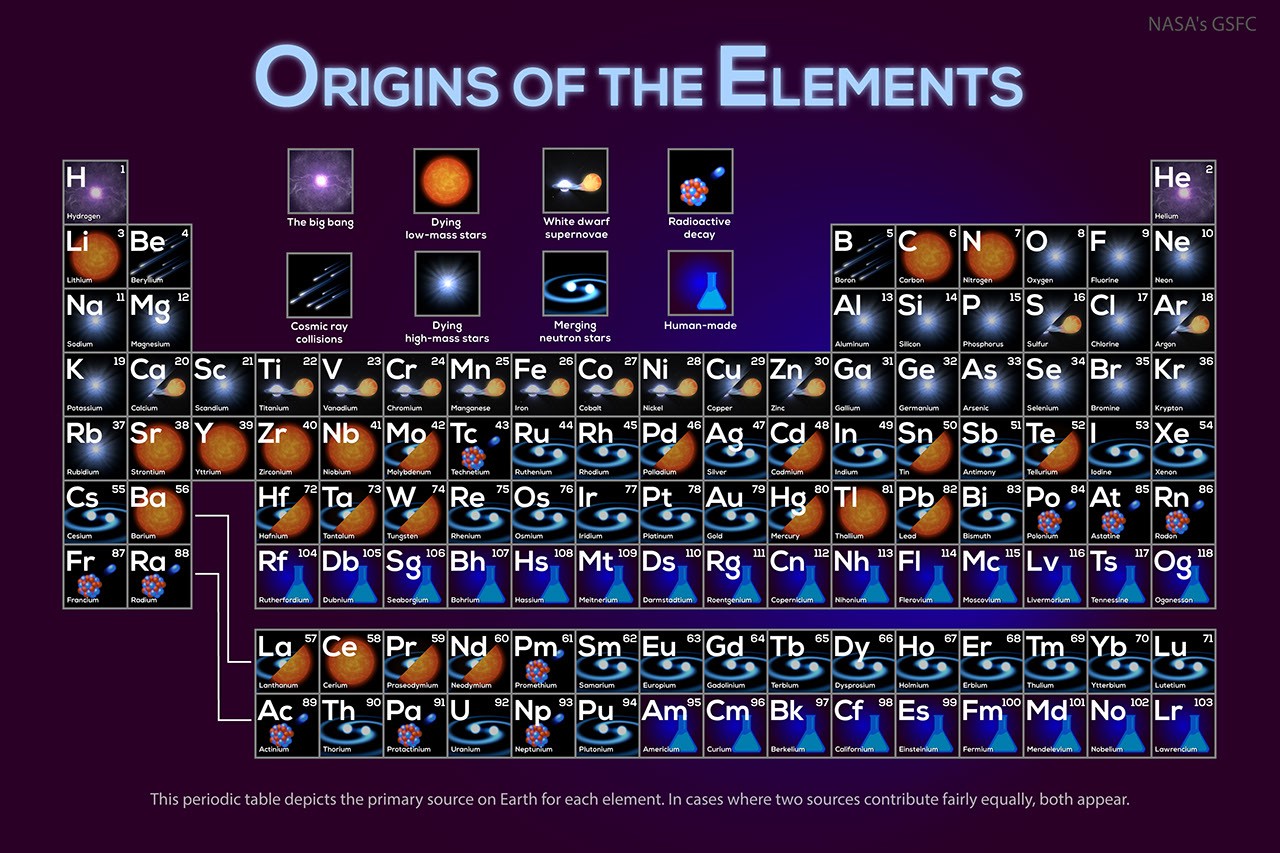
The elements that make up our bodies and the world around us have fascinating origins. From the hydrogen in every molecule of water to the gold in our jewelry, each element has a unique story of how it came to be. The most recent Astronomy Picture of the Day (APOD) from NASA provides a colorful periodic table that illustrates the nuclear origins of all known elements. This table is a testament to humanity's best understanding of the universe and its many mysteries.
Stellar Nurseries And The Big Bang
The hydrogen in our bodies is a remnant of the Big Bang, the cosmic event that marked the beginning of the universe. This element is the lightest and most abundant in the universe, and its presence is a direct result of the initial explosion that set the universe in motion. On the other hand, elements like carbon and oxygen were forged in the hearts of stars through nuclear fusion. This process involves the combination of lighter elements to form heavier ones, releasing vast amounts of energy in the process. As stars age and die, they expel these elements into space, where they can be incorporated into new stars, planets, and eventually, living organisms.
Supernovae And Neutron Star Collisions
Other elements, like iron, have their origins in the explosive deaths of stars, known as supernovae. These catastrophic events are so powerful that they can be seen from millions of light-years away, and they play a crucial role in dispersing heavy elements throughout the universe. The gold in our jewelry, for example, is thought to have been created during the collision of neutron stars, which are incredibly dense objects formed from the remnants of supernovae. These collisions can produce intense gamma-ray bursts and gravitational waves, which can be detected by sensitive instruments on Earth.
Essential Elements For Life
Some elements, like phosphorus and copper, are present in our bodies in only small amounts but are essential for the functioning of all known life. Phosphorus, for example, is a critical component of DNA and ATP, the molecule that provides energy for our cells. Copper, on the other hand, plays a vital role in the production of red blood cells and the maintenance of healthy connective tissues. The origins of these elements are still not well understood and are the subject of ongoing research, with scientists using a combination of observations and computer simulations to better understand the nuclear processes that create them.
Uncovering The Secrets Of The Universe
The study of elemental origins is an active area of research, with scientists continually refining our understanding of the universe and its many mysteries. By studying the properties of elements and the processes that create them, we can gain insights into the fundamental laws of physics and the evolution of the universe. The colorful periodic table provided by NASA's APOD is a powerful tool for visualizing the origins of the elements and highlighting the areas where further research is needed. As our understanding of the universe continues to grow, we may uncover new and exciting secrets about the elements that make up our world and our bodies.
Sources
This is an original synthesis by Qivorane based on reporting from the outlets below.