
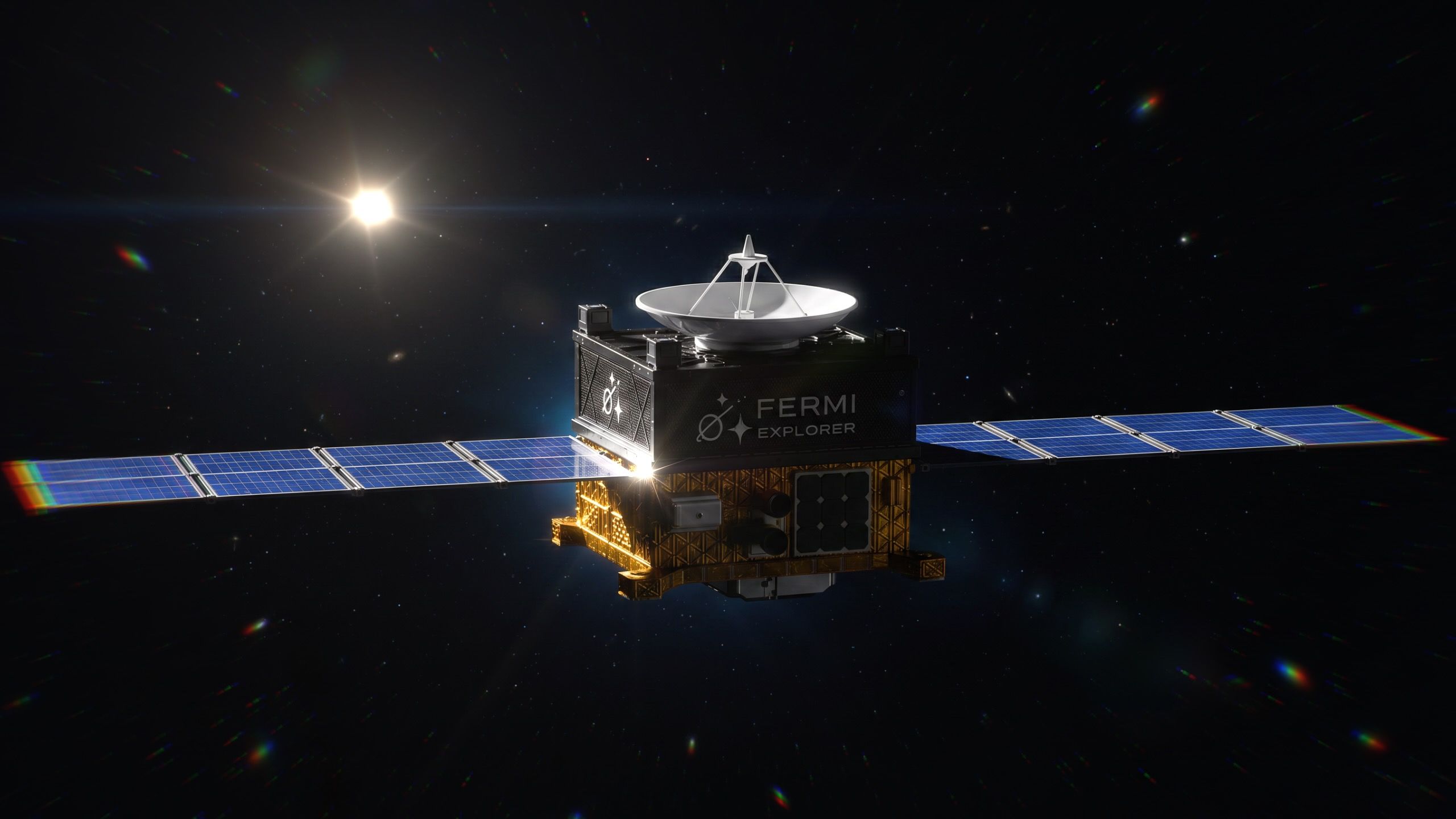
AI Plots Interstellar Journey
Nonprofit plans to launch spacecraft to Alpha Centauri by 2029 using AI-discovered trajectory
Introduction To Interstellar Travel
The concept of interstellar travel has long fascinated humans, with many considering it a crucial step in the exploration and potential colonization of the universe. Recently, a nonprofit organization called the Fermi Explorer Mission announced plans to launch a spacecraft to Alpha Centauri, the nearest star system to our own, by the end of 2029. This ambitious mission aims to achieve what many thought was impossible with current technology: sending a spacecraft to another star system without breaking the bank.The Challenge Of Reaching Alpha Centauri
Alpha Centauri is approximately 4.4 light-years away from Earth, which poses a significant challenge for spacecraft. Even the fastest objects launched by humans, such as the Voyager 1 probe, have covered less than 1% of this distance after decades of travel. The Fermi Explorer Mission team initially struggled to find a viable trajectory for their spacecraft, given the constraints of their $15 million budget. They needed a solution that would provide enough power without making the spacecraft too heavy, which would increase fuel consumption.The Role Of AI In Plotting The Journey
The breakthrough came when the team collaborated with Physical Superintelligence (PSI), an AI physics research lab. PSI's open-source software, Get Physics Done, uses AI models to break down complex physics research questions into smaller tasks and decide which simulations to run. After running the problem through this AI system, a novel trajectory was discovered. This trajectory involves the spacecraft slowing down to swing close to the sun, where it would fire its engine to gain a burst of thrust. By doing so, the spacecraft can stay small and light, with solar panels that can provide sufficient power without being too large.Mission Objectives And Implications
The Fermi Explorer Mission is not just about reaching Alpha Centauri; it's also about inspiring future generations to pursue interstellar travel. The spacecraft will carry a payload of at least one kilogram, including artistic and scientific payloads, messages, and a copy of the Golden Record, a gold-plated disc containing Earth's sounds and images. This mission aims to make interstellar travel more accessible and to encourage more people to think about the Fermi Paradox, which questions the apparent lack of intelligent life elsewhere in the universe. By launching this directed interstellar mission, the team hopes to provide new data that could help explain the paradox.The Significance Of The Fermi Paradox
The Fermi Paradox suggests that there are only three possible explanations for the lack of evidence of intelligent extraterrestrial life: human-like intelligence is rare, intelligent species don't survive for long, or intelligent aliens choose not to make contact. The Fermi Explorer Mission won't solve the paradox but will demonstrate that it's possible for intelligent species to send spacecraft to their nearest star without using excessive resources. This could imply that there are at least some species, like humans, that attempt to explore beyond their planetary boundaries.Future Outlook And Implications
The success of the Fermi Explorer Mission could pave the way for future interstellar missions. By showing that interstellar travel is achievable with current technology and a relatively low budget, the mission could inspire more investment and research into this area. The use of AI in plotting the journey highlights the potential of artificial intelligence in solving complex problems in space exploration. As humans continue to push the boundaries of what is thought possible, missions like the Fermi Explorer will play a crucial role in expanding our understanding of the universe and our place within it.Sources
This is an original synthesis by Qivorane based on reporting from the outlets below.