

Lake Bonneville's Legacy
Explore the geological wonder of Lake Bonneville and its remnants
Introduction To Lake Bonneville
The story of Lake Bonneville is one of geological wonder and transformation. At its peak, this ancient lake was nearly as large as Lake Michigan, covering much of western Utah and parts of Nevada and Idaho. Its formation began about 55,000 years ago during a cool, wet period, when volcanic eruptions diverted the Bear River, causing water to gather in Gem Valley and other basins to the south. For tens of thousands of years, a natural dam at Red Rock Pass helped confine the lake, until about 18,000 years ago, when water breached the dam, unleashing a massive flood that entered the Columbia River system.The Legacy Of Lake Bonneville
As the climate warmed and dried in subsequent millennia, Lake Bonneville shrank dramatically, leaving behind remnants that include today's Great Salt Lake, Utah Lake, and Sevier Lake. The drying of the lake exposed playas that became the setting for feats of engineering and technological ingenuity, as well as epic tales of exploration and desperation. The lakebed, where fine-grained clay, marl, and sandy sediment settled out of the water, appears pale in comparison to the darker, rockier, more vegetated surroundings.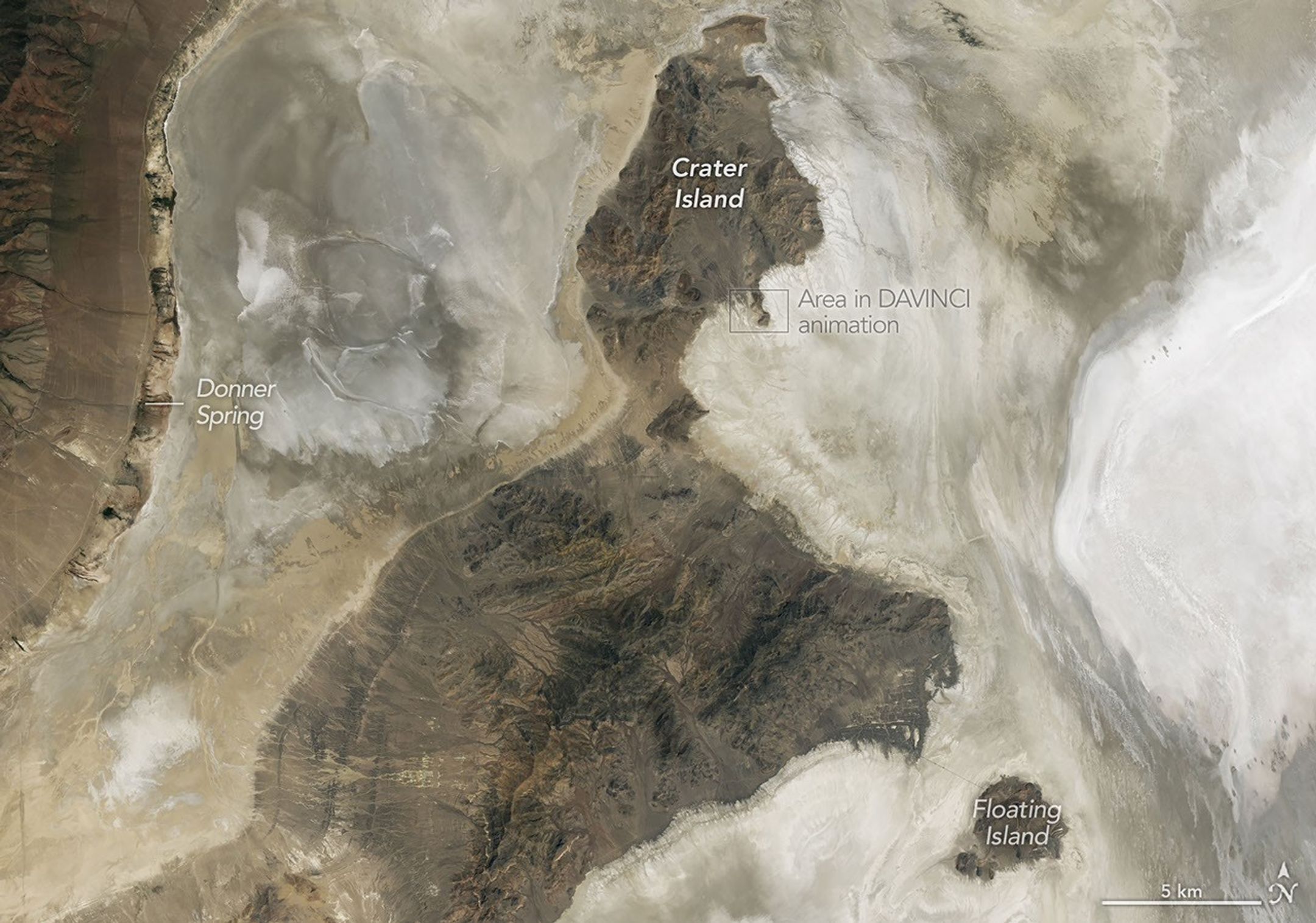
Geological Distinctions And Mining
In deep parts of the basin, where runoff and groundwater still pool, bright deposits of evaporite minerals coat the land surfaces, forming salt flats. These remarkably flat surfaces are the product of water gradually evaporating and concentrating minerals to produce brines and hard mineral crusts, typically including halite and gypsum, along with potassium- and magnesium-bearing salts. The area has long been a target for mining, particularly for potash, which is used as a fertilizer.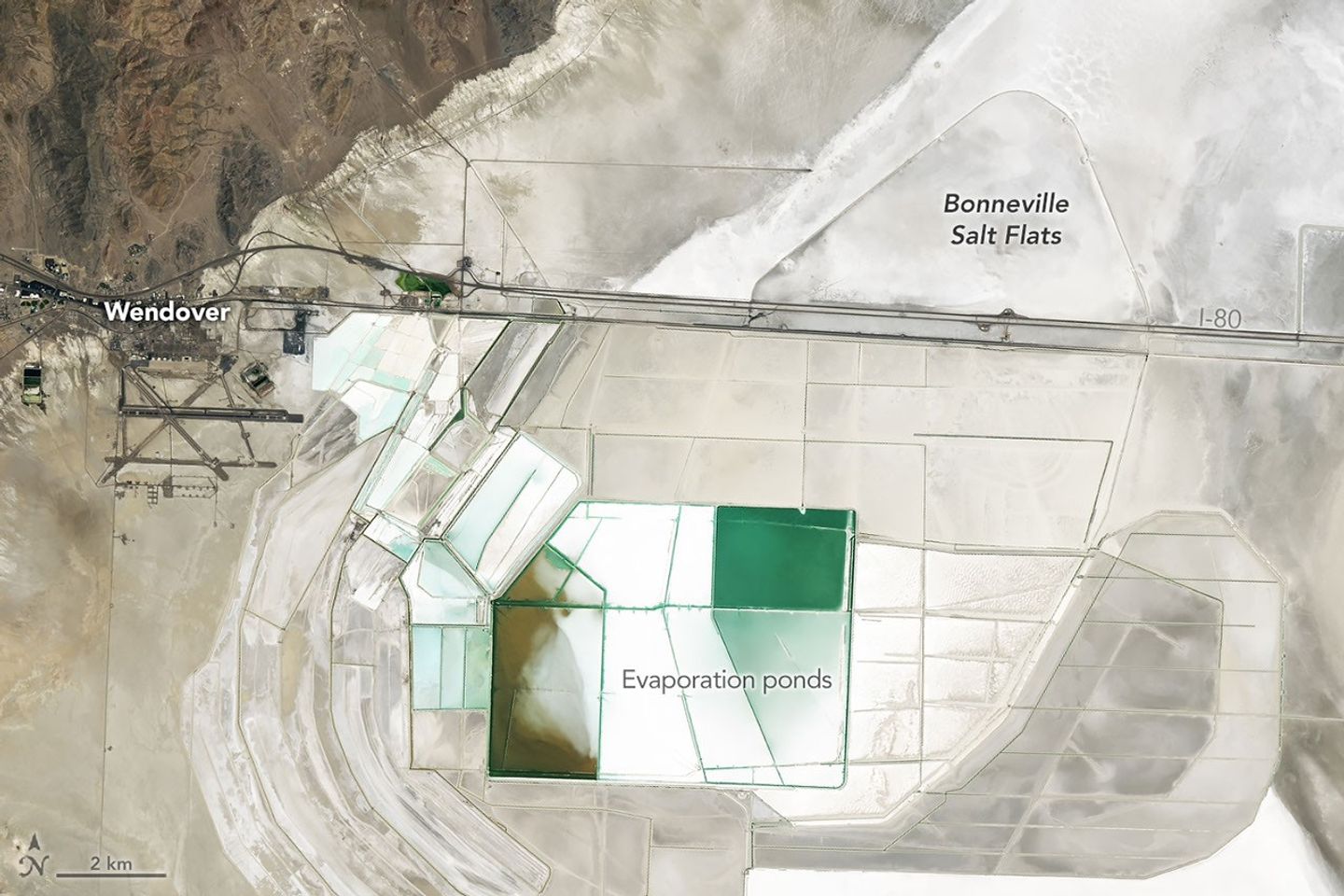
NASA's DAVINCI Mission And Crater Island
Crater Island, composed of sedimentary rocks, including silica-rich sandstones and quartzites, as well as intrusions of quartz monzonite, granites, and other igneous rocks, has been dubbed "Venus on Earth" due to its unique geological features. In June 2026, NASA scientists and engineers working with the agency's DAVINCI mission came to Crater Island to field-test technologies that will be used on the mission to Venus. The area's geological distinctions make it an ideal location for testing equipment and strategies that will be used to study the Venusian surface.
Conclusion And Future Outlook
The legacy of Lake Bonneville continues to shape the landscape of western Utah and beyond. Its remnants, including the Great Salt Lake and the Bonneville Salt Flats, are not only geological wonders but also important resources for mining and industry. As NASA's DAVINCI mission prepares to explore Venus, the unique features of Crater Island and the surrounding area will play a crucial role in testing and developing the technologies needed for this groundbreaking mission.Sources
This is an original synthesis by Qivorane based on reporting from the outlets below.