
Gel Converts Astrocytes To Neurons
Scientists discover gel that converts astrocytes to neurons, potentially treating Alzheimer's
Introduction To Neural Regeneration
Scientists have made a groundbreaking discovery that could potentially lead to the treatment of Alzheimer's disease. A new study has found that a gel can be used to transform astrocytes, a type of cell in the brain, into neurons. This breakthrough could provide a new approach to regenerating neurons that are lost due to conditions like Alzheimer's. Astrocytes are abundant in the brain and play a crucial role in protecting and supporting the functions of neurons. By converting these cells into neurons, researchers may be able to replenish lost neurons and restore brain function.The Science Behind The Gel
The gel used in the study works by reducing levels of a key protein in astrocytes called PTBP1. This protein is crucial for astrocyte development, and eliminating it can convert astrocytes into neurons. The researchers used a technique called Nano-Eraser to delete PTBP1 from astrocytes without editing any of their genes. They packaged an antibody that targets PTBP1 into a polymer gel, which helped sneak the antibody across the blood-brain barrier. Once the antibody reaches astrocytes in the brain, it binds to PTBP1 and drives the cell's internal machinery to destroy the protein.
Testing The Gel
The researchers first tested the gel in human astrocytes grown in lab dishes. Over the course of days, astrocytes exposed to the gel lost their characteristic star shape and started to form axons, the wires from which neurons send messages. Proteins typically found in neurons also became more abundant in the astrocytes. The cells later showed electrical activity that further confirmed that they were functioning similarly to neurons and could fire synchronously. The gel also showed similar results in miniature models of the brain, called organoids, which had been grown from human stem cells.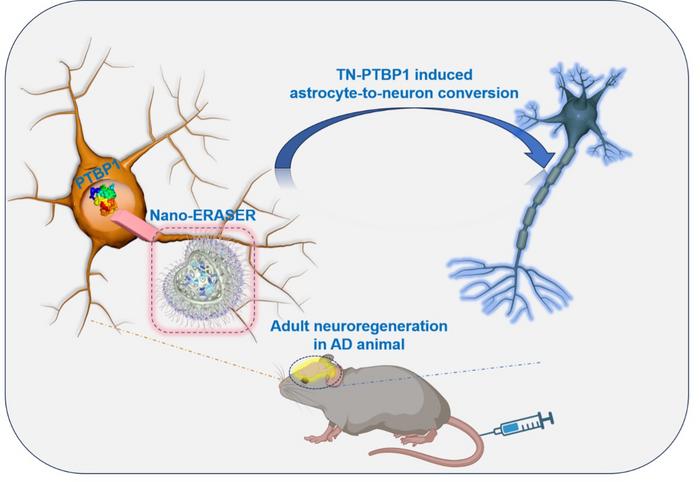
Potential Applications
The discovery of this gel could have significant implications for the treatment of Alzheimer's disease. If successfully developed into a treatment for humans, this new approach could replenish lost neurons and restore brain function. The researchers tested the gel in mouse models of Alzheimer's disease and found that it improved memory in treated mice. While more research is needed to fully understand the potential of this gel, it provides a promising new avenue for the treatment of Alzheimer's and other neurodegenerative diseases.Exercise And Neural Regeneration
In related research, scientists have found that exercise may also play a role in neural regeneration. A study in mice found that exercise causes astrocytes to contract, which can lead to the formation of new neurons. The researchers found that the contraction of astrocytes releases substances that help neurons grow and repair. This discovery could help explain how exercise boosts brain health and protects against cognitive decline. While the exact mechanisms are still unclear, the study suggests that astrocyte contraction may make the cell membrane easier to cross or help facilitate the release of vesicles from within the cell that carry important chemicals to surrounding neurons.Future Outlook
The discovery of the gel and the role of exercise in neural regeneration provide new hope for the treatment of Alzheimer's and other neurodegenerative diseases. Further research is needed to fully understand the potential of these discoveries and to develop effective treatments. However, the findings suggest that it may be possible to regenerate neurons and restore brain function, which could have a significant impact on the lives of people affected by these diseases.Sources
This is an original synthesis by Qivorane based on reporting from the outlets below.