

Genetic Diversity In Human Sperm
Scientists discover unexpected source of genetic variation in human sperm, challenging long-standing views of human genetics.
Introduction To Genetic Diversity
Genetic diversity is the backbone of evolution, allowing species to adapt and thrive in changing environments. In humans, this diversity is generated through a process called recombination, where segments of DNA are exchanged or copied between chromosomes as sperm and eggs are formed. Recently, scientists have made a groundbreaking discovery, identifying an unexpected source of genetic variation in human sperm that occurs earlier in sperm development than previously thought.Understanding Recombination
Recombination is a fundamental process that generates genetic diversity by creating new combinations of existing alleles. There are two main types of recombination: crossovers, where large sections of chromosomes are exchanged in a two-way swap, and non-crossover gene conversion, where a short stretch of DNA is copied from one chromosome to the other. While crossovers are well characterized, non-crossover gene conversions have been challenging to study due to their short duration and low frequency. Researchers at the Wellcome Sanger Institute, the University of Cambridge, and their collaborators have used highly accurate long-read sequencing to analyze 15 sperm samples from 13 donors, identifying 7,143 crossover events and 2,382 non-crossover gene-conversion events directly from sperm DNA.Discovering Pre-Meiotic Gene Conversion
The team's analysis revealed that a substantial proportion of gene conversion appears to originate before meiosis begins, during the normal cell divisions that maintain the cells responsible for producing sperm throughout a person's life. These premeiotic DNA changes carry molecular signatures that distinguish them from changes that occur during meiosis, closely resembling DNA repair processes observed in normal body tissues. The researchers also found that gene-conversion frequency and location vary between individuals, including identical twins, indicating that genetic diversity is shaped not only by inherited factors but also by biological processes that vary from person to person.
Implications For Fertility And Disease
The discovery of pre-meiotic gene conversion in sperm has significant implications for our understanding of fertility and disease. The researchers suggest that a substantial fraction of non-crossover gene conversion events seen in sperm arise prior to meiosis, challenging the long-standing view of human genetics. This new insight into the roots of human diversity opens up new opportunities to investigate biological mechanisms underlying fertility, genome evolution, and inherited disease. Furthermore, the study's findings may also provide clues to the underlying causes of certain diseases, such as those related to genetic mutations or chromosomal abnormalities.
Future Directions
The study's use of long-read sequencing to analyze sperm DNA has paved the way for future research into the mechanisms underlying genetic diversity. By examining the molecular signatures of premeiotic gene conversion, researchers may be able to gain a better understanding of the biological processes that shape genetic diversity. Additionally, the study's findings may also have implications for the development of new treatments for fertility-related disorders or genetic diseases.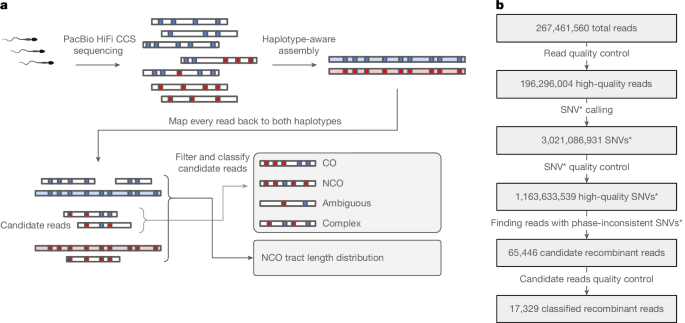
Conclusion
In conclusion, the discovery of pre-meiotic gene conversion in human sperm is a significant breakthrough in our understanding of genetic diversity. The study's findings have far-reaching implications for our understanding of fertility, genome evolution, and inherited disease. As researchers continue to explore the mechanisms underlying genetic diversity, we may uncover new insights into the complex processes that shape the human genome.Sources
This is an original synthesis by Qivorane based on reporting from the outlets below.