
Roman Era Mosaic Discovery
Archaeologists uncover stunning Roman-era mosaic in Turkey featuring named animals Emerald and Ocean
Introduction To Roman Era Mosaics
A recent archaeological discovery in Turkey has shed new light on the lives of wealthy Romans in the late second to third centuries A.D. A stunning Roman-era mosaic, featuring a cat named Emerald and a dog named Ocean, was unearthed in the ancient city of Adramytteion on Turkey's Aegean coast. The mosaic was a key feature of a villa, which was recently excavated by a team of archaeologists led by Hüseyin Özgen from Mimar Sinan Fine Arts University.
Background And Context
The Roman villa, which has been dated to the late second to third centuries A.D., is a significant find in the ancient city of Adramytteion. In the Roman period, Adramytteion was a provincial capital within Asia Minor and a prime trading spot due to its location at the head of a gulf on the Aegean Sea. The villa included three mosaic-paved halls, a number of secondary rooms, and a network of pipes and drains that may have connected to a latrine. The impressive villa would have been an important center of trade and commerce in the region.
The Mosaic Discovery
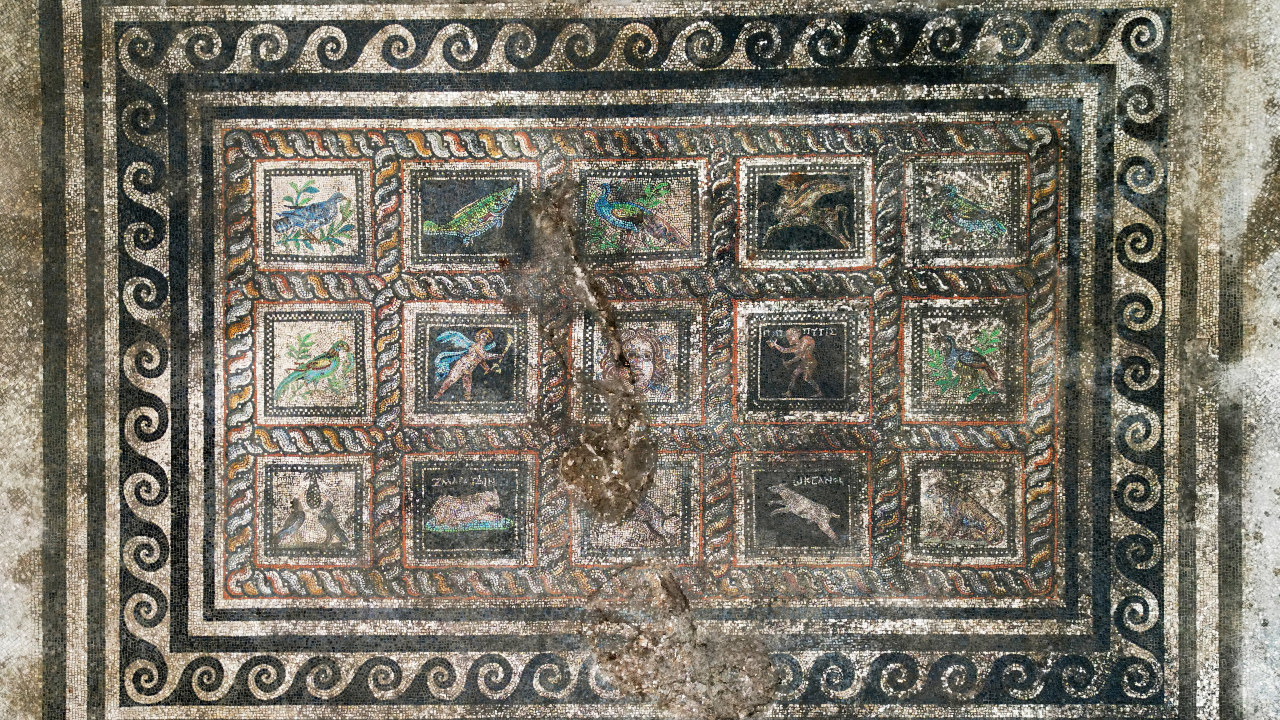
The colorful floor mosaic, which measures about 16.4 by 11.8 feet (5 by 3.6 meters), contains 15 panels arranged in three rows. Most of the panels depict birds, fish, and felines, but two mythologically inspired panels include a gorgon (possibly Medusa) and a winged horse (possibly Pegasus). Ancient artists used a range of colored tiles, including white, black, red, orange, yellow, pink, burgundy, blue, turquoise, and green, to create the intricate design. The mosaic is a remarkable example of Roman art and craftsmanship.
Emerald And Ocean: The Named Animals
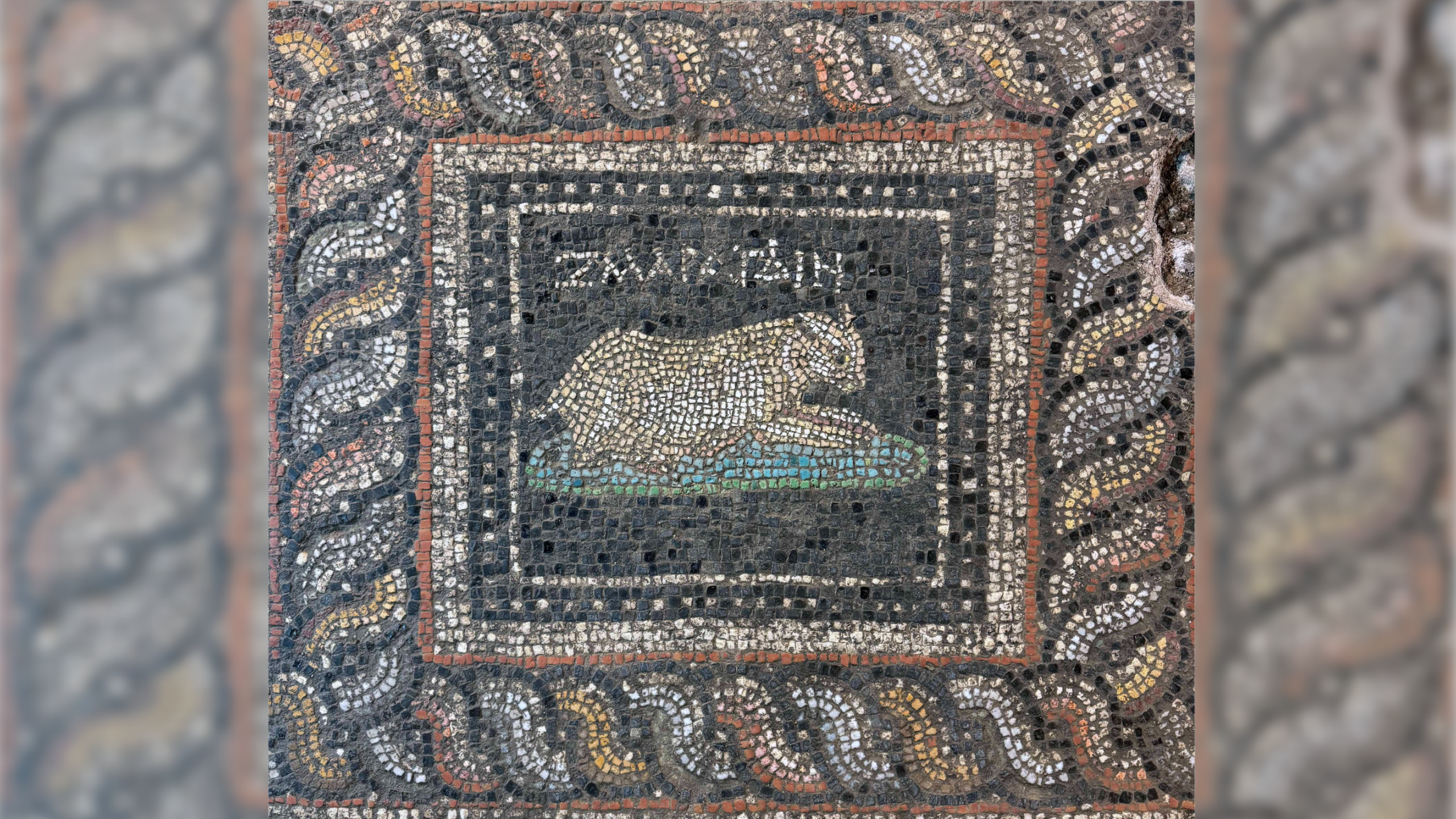
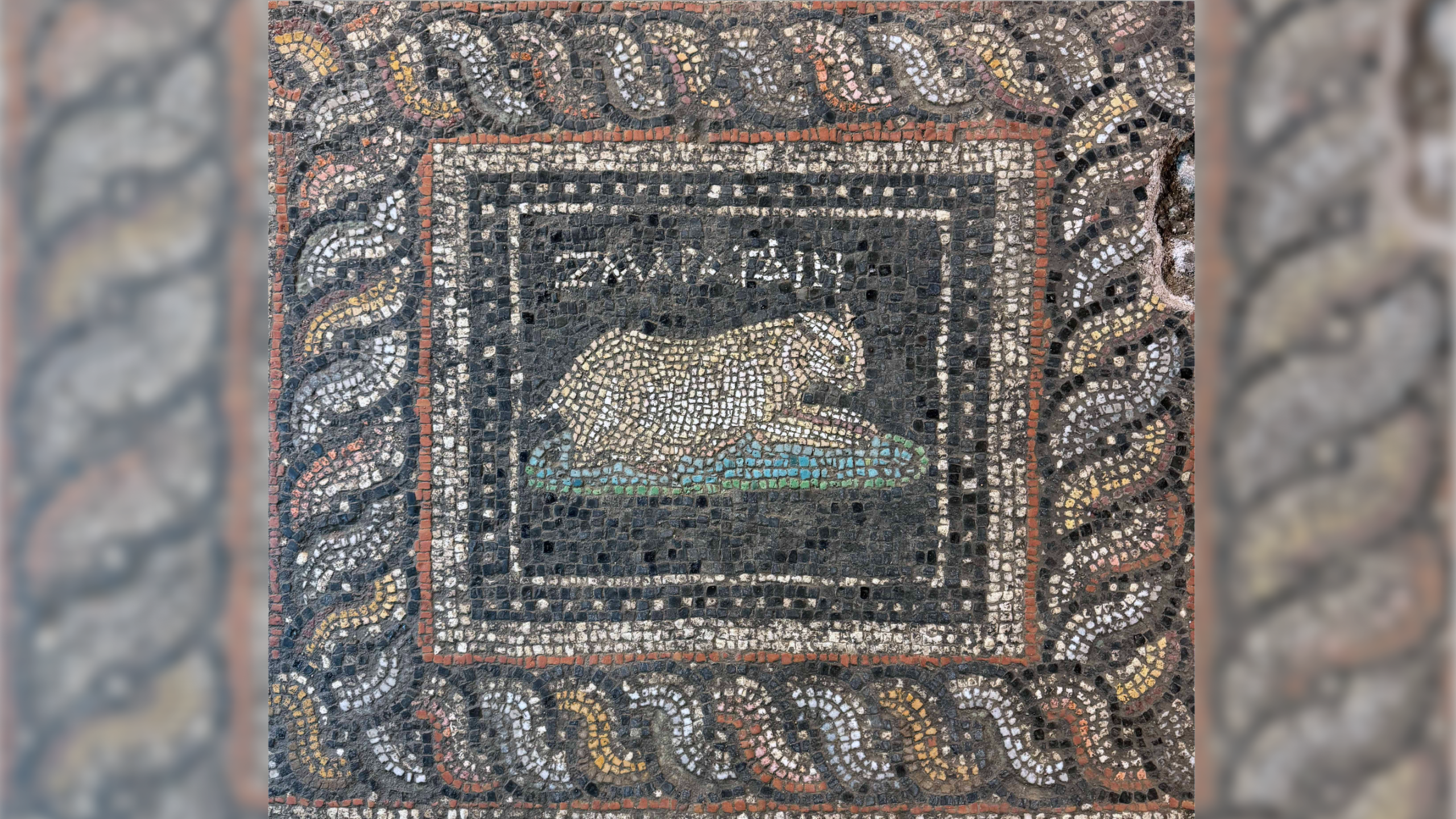
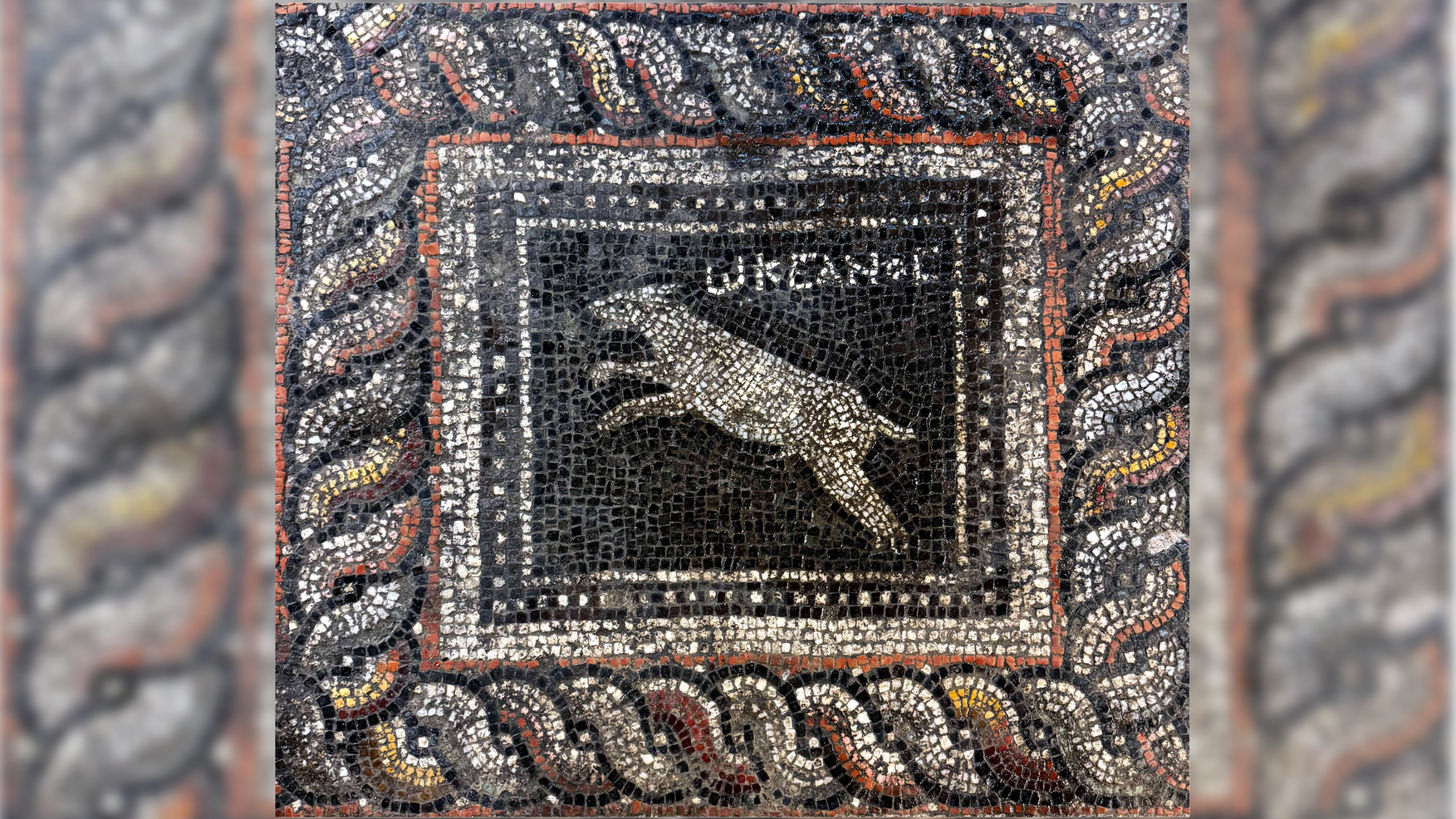
Only two of the animals depicted in the mosaic are named: Emerald the cat and Ocean the dog. Emerald is depicted as a pale cat seated on a blue-green cushion, with the Greek letters Ζμαραγδίν (Zmaragdin), meaning emerald, written above her. The relaxed cat sitting on a cushion suggests that Emerald may have been a pet rather than a stray. Ocean, on the other hand, is depicted as a running or leaping dog, labeled with the Greek letters Ωκεανός (Okeanos), meaning ocean. The names of the animals may have been chosen due to their significance to the villa owner, who may have had connections to the desert of Roman Egypt, where emeralds were mined, or to the harbor city of Adramytteion, where Ocean got his name.
Real-World Implications And Future Outlook
The discovery of the Roman-era mosaic in Turkey provides a unique insight into the lives of wealthy Romans in the late second to third centuries A.D. The mosaic is a remarkable example of Roman art and craftsmanship, and the named animals, Emerald and Ocean, offer a fascinating glimpse into the personal lives of the villa owner and their household. The excavation of the villa and the mosaic is an important archaeological find, which will contribute to our understanding of the Roman period in Turkey and the wider Mediterranean region. Further research and analysis of the mosaic and the villa will provide a more detailed understanding of the significance of this discovery and its implications for our knowledge of Roman history and culture.
Sources
This is an original synthesis by Qivorane based on reporting from the outlets below.