
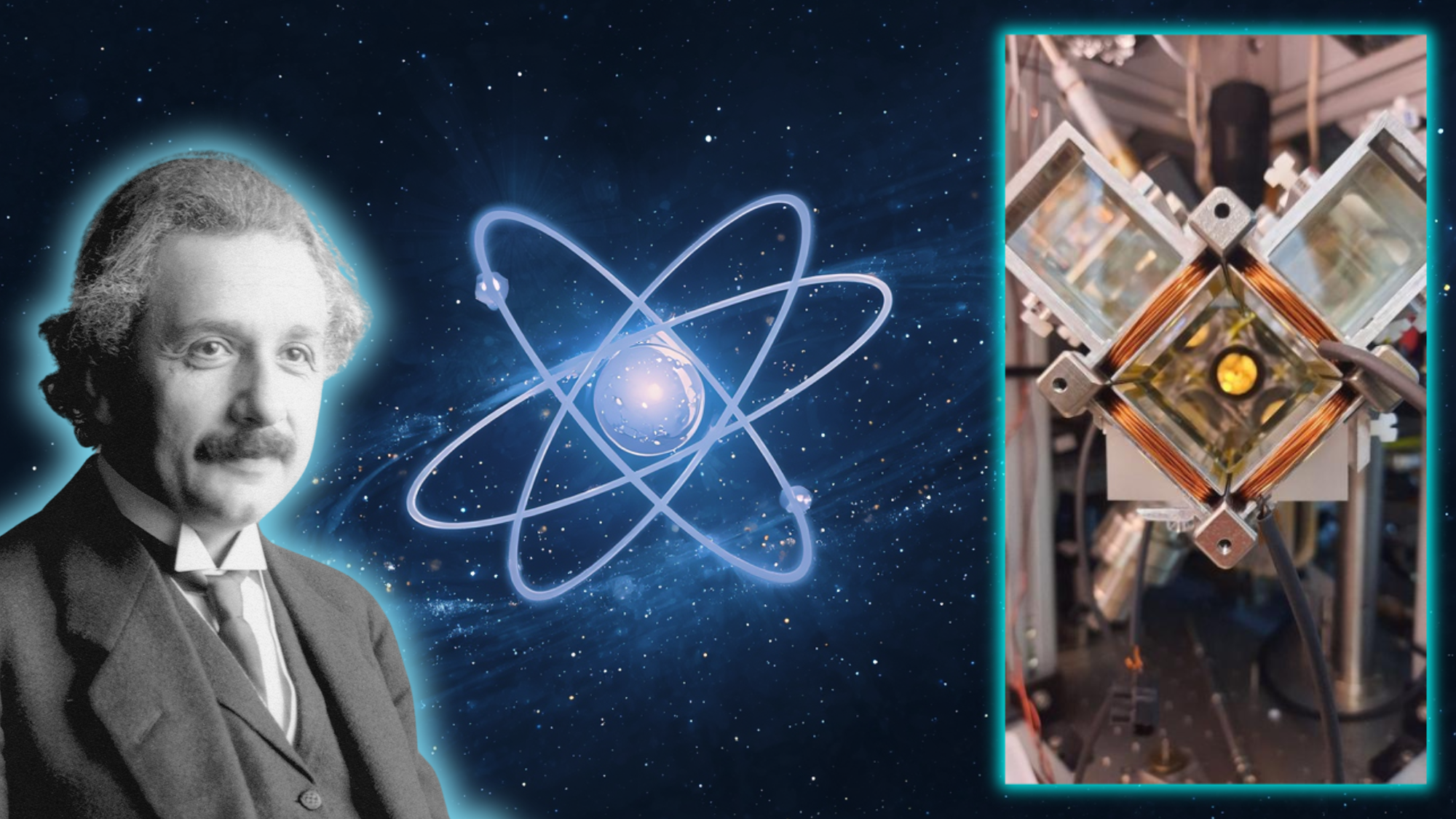
Quantum Gravity Breakthrough
Scientists observe Einstein's gravity in quantum realm, a step towards unified theory
Introduction To Quantum Gravity
The long-standing quest to merge two fundamental theories in physics, general relativity and quantum mechanics, has taken a significant step forward. Scientists have successfully observed the first hints that Albert Einstein's formulation of gravity operates in the quantum realm, a breakthrough that could pave the way for a unified theory of everything. This achievement is the result of an intricate experiment designed to test the equivalence principle, a cornerstone of general relativity, at a quantum scale.Background And Theoretical Framework
General relativity describes the universe on large scales, from the motion of planets to the expansion of the cosmos, while quantum mechanics governs the behavior of particles at the atomic and subatomic level. However, these two theories do not align seamlessly, leaving physicists without a complete theory that reconciles both. The equivalence principle, which states that gravity should disappear for an observer in free fall, has been extensively tested with ordinary matter but proving it with quantum objects has been challenging due to their wave-like behavior.Experimental Approach And Findings
To overcome this challenge, researchers employed the Quantum Galileo Interferometer, an instrument capable of splitting the quantum wave associated with an atom into two paths. One path was held stationary, while the other was allowed to fall freely under the influence of gravity. By then recombining these paths, the team could measure the effect of gravity on the quantum properties of the atom. The experiment utilized clouds of rubidium atoms cooled to near absolute zero and manipulated using a specially designed atom chip. The results showed that the quantum phase measured matched the prediction based on Einstein's equivalence principle applied to quantum waves, providing a direct connection between quantum physics and Einstein's description of gravity.Implications And Future Outlook
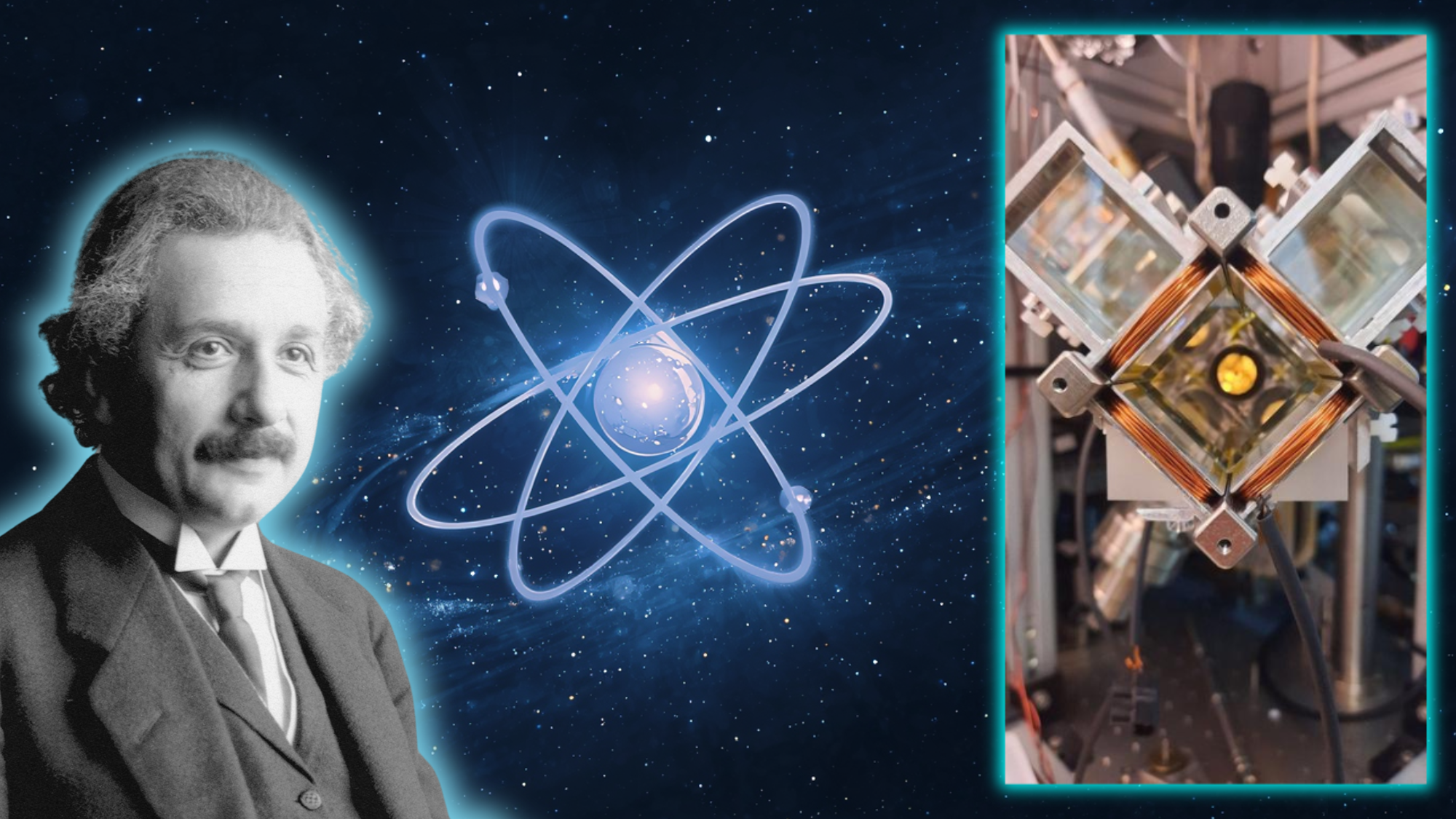 This experiment marks a significant milestone in the pursuit of a quantum theory of gravity. By demonstrating the validity of the equivalence principle in the quantum realm, it offers new insights into how gravity and quantum mechanics might be unified. The findings have profound implications for our understanding of the universe, potentially leading to breakthroughs in fields ranging from cosmology to materials science. Further research and more sophisticated experiments will be necessary to fully explore the intersection of gravity and quantum mechanics, but this achievement represents a crucial step toward a more comprehensive theory of the universe.
Methodological Innovations
The success of this experiment hinges on several methodological innovations, particularly the development and use of the Quantum Galileo Interferometer. This device enables the precise control and manipulation of quantum waves, allowing for the direct measurement of gravitational effects on quantum objects. The experiment's design, which includes cooling atoms to near absolute zero and employing carefully controlled magnetic fields, demonstrates the ingenuity and technical prowess required to explore the quantum-gravity interface.Conclusion And Broader Context
The observation of Einstein's gravity in the quantum world for the first time is a testament to human curiosity and the relentless pursuit of understanding the fundamental laws of the universe. As scientists continue to push the boundaries of knowledge, experiments like this one will play a crucial role in shaping our comprehension of reality. The quest for a unified theory, one that seamlessly integrates general relativity and quantum mechanics, remains an open challenge, but with each breakthrough, we move closer to a deeper understanding of the cosmos and our place within it.Sources
This is an original synthesis by Qivorane based on reporting from the outlets below.