
Microbes Turn Plastic into Food
Scientists use microbes to convert plastic waste into edible ingredients, potentially solving two global problems.
Introduction to Microbe-Based Food Production
The global population is projected to increase by up to 50 percent between 2010 and 2050, leading to a significant rise in food demand. Meanwhile, plastic pollution continues to worsen worldwide. To address these issues, a team of researchers from Southern Illinois University (SIU) Carbondale has developed a technology that utilizes reprogrammed yeasts to convert plastic compounds and agricultural waste into proteins, vitamins, and flavorings. This innovative method has the potential to produce sustenance in disaster zones or on human deep-space missions.The Power of Microbes in Solving Global Problems
Microbes have been found to be highly effective in solving the problems of plastic pollution and food insecurity. The researchers from SIU Carbondale, as part of NASA's Deep Space Food Challenge, aimed to determine if microbes could be programmed to transform plastic waste into edible compounds for humans. They discovered that one of the most common forms of plastic, polyethylene terephthalate (PET), contains a significant amount of carbon, which is also a key component of protein. By using microbes to break down PET and other biomaterials, the researchers were able to create a variety of food ingredients, including proteins, vitamins, and flavorings.The Process of Converting Plastic Waste into Edible Ingredients
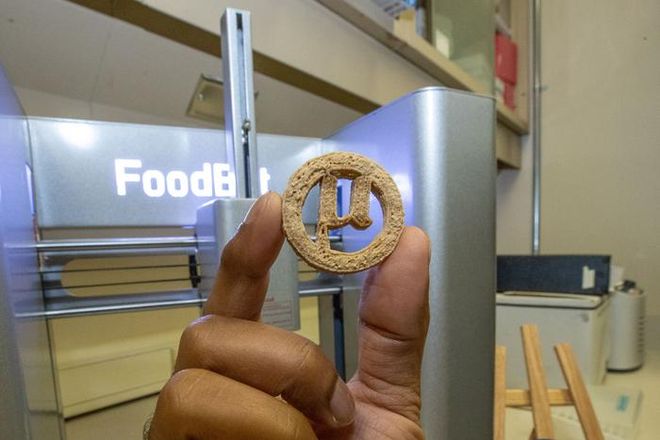
The process of converting plastic waste into edible ingredients involves several steps. First, the researchers use a proprietary process called oxidative hydrothermal dissolution to break down the plastic and biomaterials into microbe-accessible pieces. This method uses water and oxygen at high temperatures and pressures to dissolve the tough materials. The resulting pieces are then fed to programmed yeasts, which transform them into a variety of new food ingredients. These ingredients are then combined with fiber, starch, and sweetener to create a protein-rich cookie, dubbed "µBites" (pronounced "microbites").
Potential Applications and Future Outlook
The technology developed by the SIU Carbondale researchers has the potential to address two major global problems: plastic pollution and food insecurity. The ability to convert plastic waste into edible ingredients could provide a sustainable solution for producing food in disaster zones or on human deep-space missions. Additionally, this technology could also be used to reduce plastic waste and promote a more circular economy. While the researchers are awaiting institutional approval to conduct taste tests, the initial results have shown that the µBites cookies are safe to eat and have received high marks for aroma.Real-World Implications and Challenges
The real-world implications of this technology are significant, with potential applications in disaster relief, space exploration, and sustainable food production. However, there are also challenges that need to be addressed, such as scaling up the production process and ensuring the safety and palatability of the final product. Furthermore, the use of genetically engineered microbes raises ethical and regulatory concerns that need to be carefully considered. Despite these challenges, the potential benefits of this technology make it an exciting and promising area of research.Conclusion and Future Directions
In conclusion, the development of a technology that utilizes reprogrammed yeasts to convert plastic compounds and agricultural waste into proteins, vitamins, and flavorings is a significant breakthrough in addressing global problems. The potential applications of this technology are vast, and further research is needed to fully realize its potential. As the world continues to grapple with the challenges of plastic pollution and food insecurity, innovative solutions like this one offer a beacon of hope for a more sustainable and equitable future.
Sources
This is an original synthesis by Qivorane based on reporting from the outlets below.