
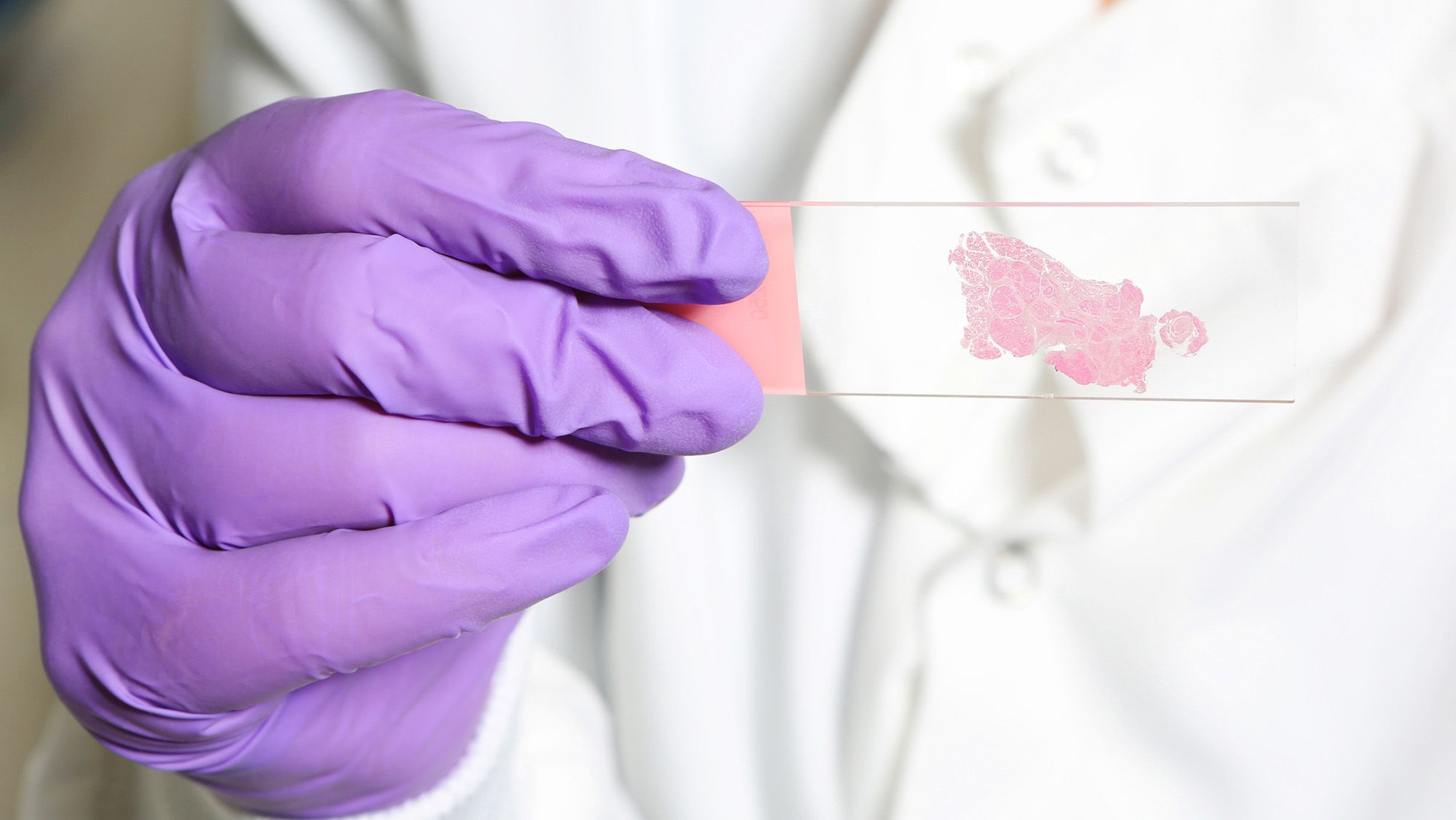
AI Trained To Think Like Pathologists
AI trained to think like human pathologists may improve cancer detection rates
Introduction To AI Assisted Cancer Detection
Artificial intelligence (AI) algorithms have been increasingly used to analyze tissue-sample slides for cancer detection. However, many AI systems have limitations in their analysis approach, which can lead to inaccurate results. A new study suggests that AI trained to "think" like human pathologists may be better at spotting cancer. The researchers trained AI to screen tissue-sample slides similar to how a human pathologist would, by dynamically searching the tissue, zooming in and out, and pausing over areas that raise red flags.
Understanding Human Pathologist Behavior
A human pathologist searches for cancer by scanning the tissue, zooming in and out, and pausing over areas that raise red flags. This process can be compared to a search-and-rescue helicopter, where the helicopter scans the landscape first and then swoops in for a closer look. The researchers aimed to train AI to mimic this behavior, by creating a tool that recorded how pathologists moved around a slide and changed magnification. The raw logs, gathered from eight pathologists, were messy, but the researchers filtered out incidental movements, focusing on moments that appeared to represent deliberate attention.
Training AI With Pathology-CoT
The researchers trained their new AI using an approach called "Pathology-CoT," short for "chain of thought." This approach turns observable actions, including where pathologists move around and zoom in on an image, into training data. The AI was trained to scan a slide at low resolution, use a model trained on pathologists' behavior to choose regions worth a closer look, and then send higher-resolution views of those regions to a vision language model (VLM) for analysis. The VLM also drafted a short rationale explaining why the region was worth examining and what features were visible, which human pathologists could then accept, edit, or reject.
Putting Pathology-o3 To The Test
The researchers used the Pathology-CoT training method to build a new tool called Pathology-o3. Pathology-o3 scans a slide at low resolution, uses a model trained on pathologists' behavior to choose regions worth a closer look, and then sends higher-resolution views of those regions to a VLM for analysis. The goal of the new study was not to show that Pathology-o3 worked better than specialized AI models, but to see whether the new training approach could help a general-purpose AI navigate a pathology slide. The results suggest that AI trained to "think" like human pathologists may be better at spotting cancer, and could potentially improve cancer detection rates.
Real-World Implications And Future Outlook
The study's findings have significant implications for the use of AI in cancer detection. If AI can be trained to mimic the behavior of human pathologists, it could potentially improve cancer detection rates and reduce the workload of human pathologists. The researchers' approach could also be applied to other areas of medicine, where AI is used to analyze medical images. However, further research is needed to fully realize the potential of AI-assisted cancer detection, and to address the challenges and limitations of the technology.
Sources
This is an original synthesis by Qivorane based on reporting from the outlets below.